Continuous Spatial Stress Variations within a Granitic Rock Mass: Revealed by Cross-sectional Ellipticity of an Array of Boreholes
利用钻孔横截面椭圆度反演地应力,提升应力数据空间连续性,精细表征应力非均质性
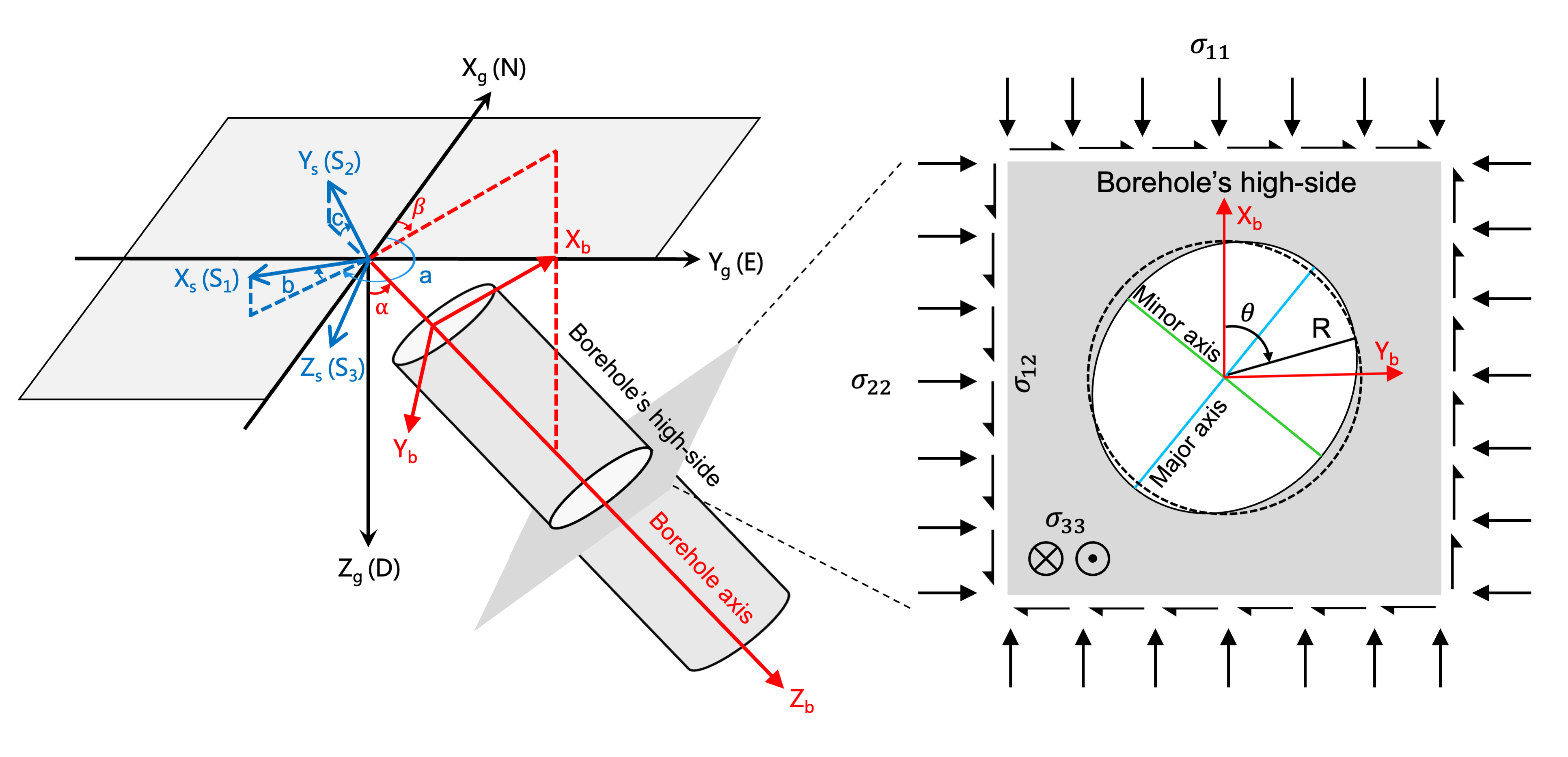
Understanding the spatial variations of in-situ stress is crucial for optimizing subsurface resource development and mitigating geological hazards. However, due to the spatial sparsity of conventional stress measurement methods (e.g., hydraulic fracturing and overcoring), critical stress variations might be overlooked. To enhance the continuity of stress profiling, we utilize borehole cross-sectional ellipticity resulting from stress-induced borehole deformation to obtain continuous and abundant stress information. We developed a workflow to extract borehole cross-sectional ellipticity from the acoustic televiewer (ATV) logs, which provide high-resolution measurements of borehole cross-sectional geometry. Based on a borehole array in the Bedretto Underground Laboratory in Switzerland, we characterized the stress variations within a hectometer-scale granitic rock mass using borehole cross-sectional ellipticity. We found that each borehole exhibited significant variations in cross-sectional ellipticity along its depth, indicating strong heterogeneity of the stress field. Subsequently, we employed a grid search algorithm to invert the continuous stress variations along each borehole based on its crosssectional ellipticity. The results indicate that the rock mass is generally in a normal faulting stress regime, but the stress orientations and relative stress magnitudes vary significantly. The causes of such stress variations could be related to local stress concentrations caused by fractures or stress perturbations resulting from fault slip. Our work provides a quantitative characterization of continuous stress variations within rock masses without direct stress measurements, which is beneficial to various geoscientific and subsurface engineering applications.
Breakout-picker: Reducing false positives in deep learning-based borehole breakout characterization from acoustic image logs
负样本与地质力学认识约束的成像测井钻孔崩落智能表征算法,降低误报风险
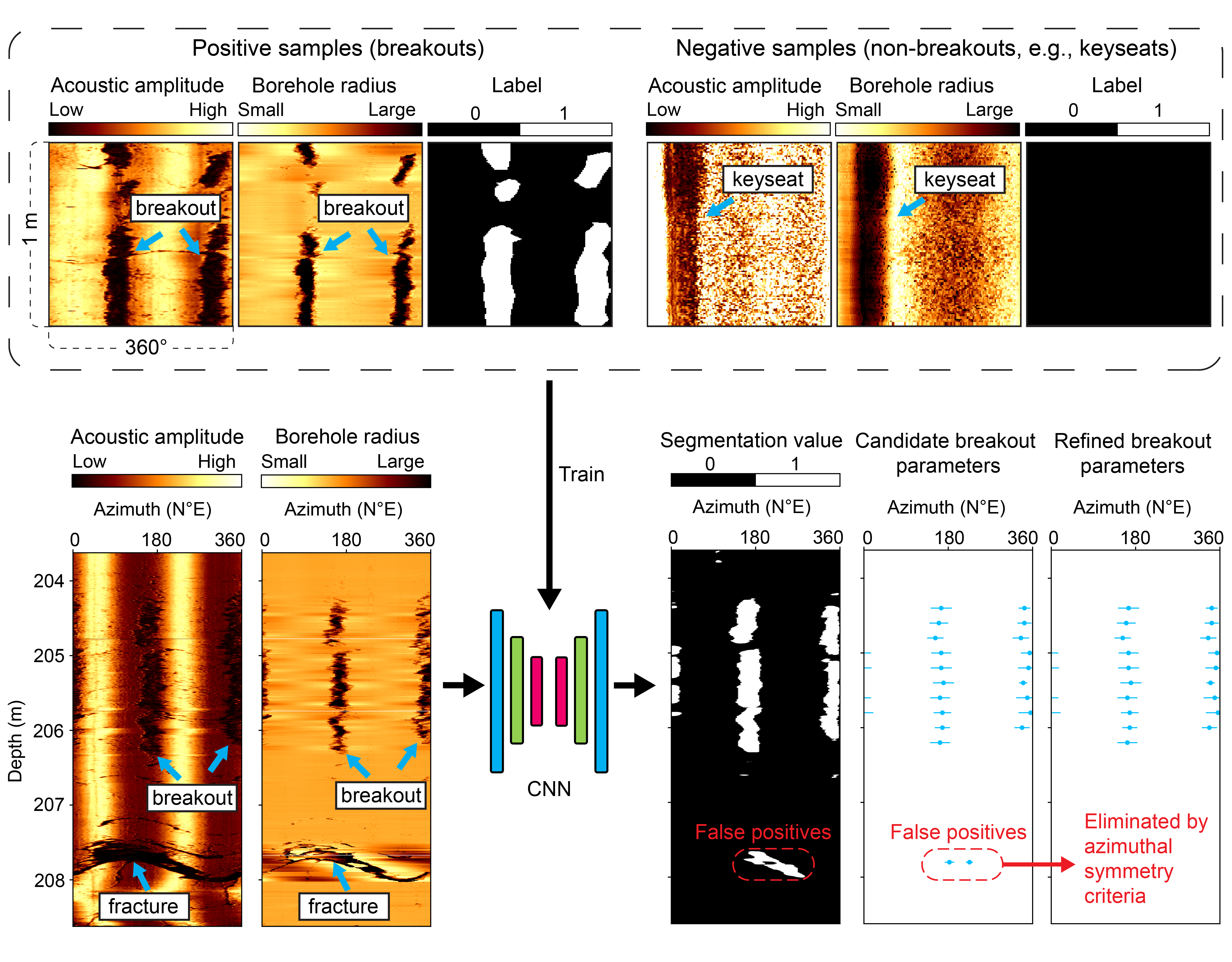
Borehole breakouts are stress-induced spalling on the borehole wall, which are identifiable in acoustic image logs as paired zones with near-symmetry azimuths, low acoustic amplitudes, and increased borehole radius. Accurate breakout characterization is crucial for in-situ stress analysis. In recent years, deep learning has been introduced to automate the time-consuming and labor-intensive breakout picking process. However, existing approaches often suffer from misclassification of non-breakout features, leading to high false positive rates. To address this limitation, this study develops a deep learning framework, termed Breakout-picker, with a specific focus on reducing false positives in automatic breakout characterization. Breakout-picker reduces false positives through two strategies. First, the training of Breakout-picker incorporates negative samples of non-breakout features, including natural fractures, keyseats, and logging artifacts. They share similar characteristics with breakouts, such as low acoustic amplitude or locally enlarged borehole radius. These negative training samples enables Breakout-picker to better discriminate true breakouts and similar non-breakout features. Second, candidate breakouts identified by Breakout-picker are further validated by azimuthal symmetry criteria, whereby detections that do not exhibit the near-symmetry characteristics of breakout azimuth are excluded. The performance of Breakout-picker is evaluated using three acoustic image log datasets from different regions. The results demonstrate that Breakout-picker outperforms other automatic methods with higher accuracy and substantially lower false positive rates. By reducing false positives, Breakout-picker enhances the reliability of automatic breakout characterization from acoustic image logs, which in turn benefits in-situ stress analysis based on borehole breakouts.
Fracture-picker: Adapting Vision Foundation Model for Fracture Characterization from Acoustic Borehole Image Logs
基于视觉基础模型DINOv3的成像测井裂缝智能表征算法,解决小样本泛化难题
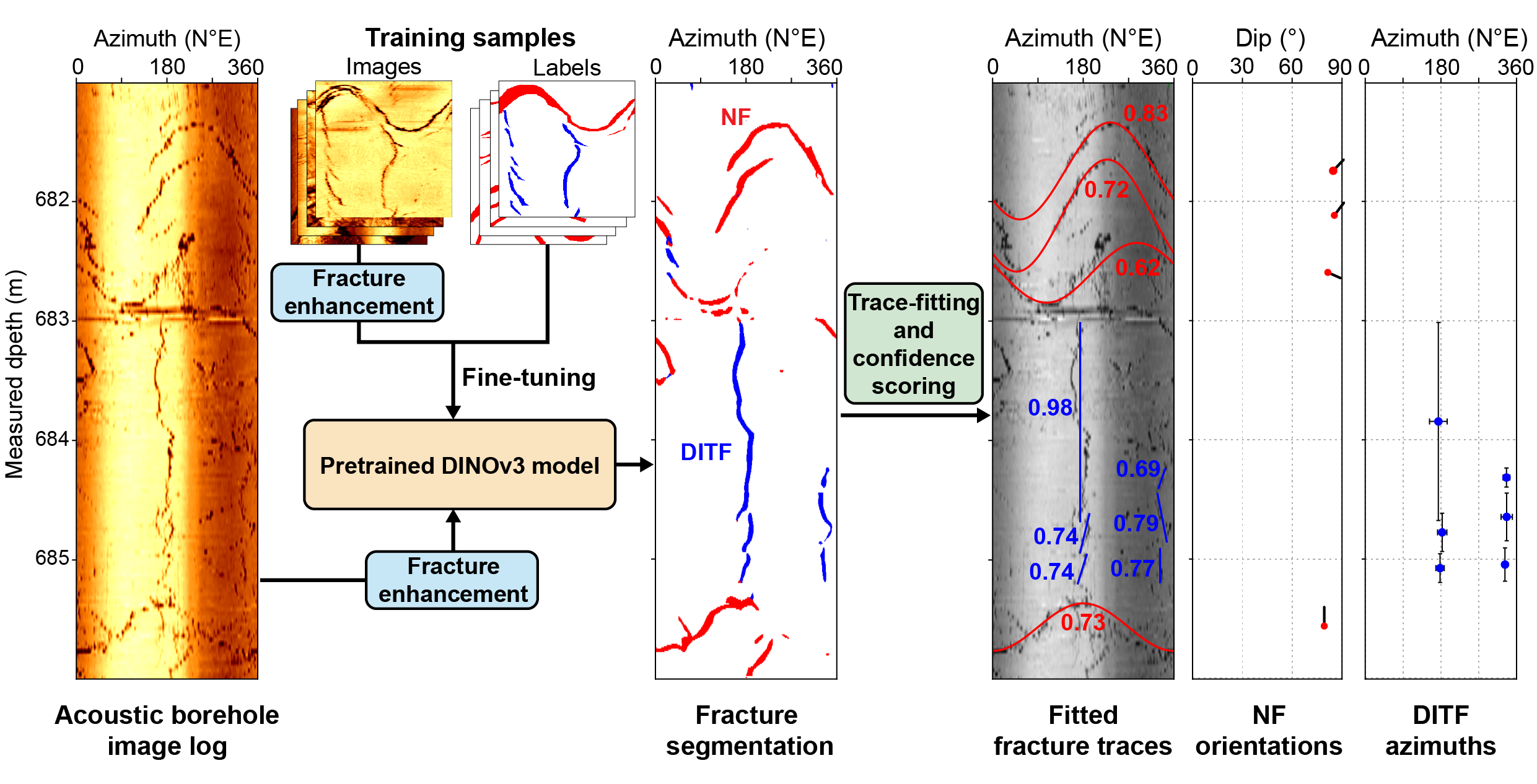
Fracture characterization from acoustic borehole image (ABI) logs is essential for subsurface geological investigation, as natural fractures (NFs) and drilling-induced tensile fractures (DITFs) provide critical constraints on rock properties and in-situ stress orientation. Deep-learning-based approaches have been proposed for automated fracture characterization, but they typically rely on task-specific architectures trained from scratch. Such models require substantial annotated data to perform reliably, yet obtaining expert-labeled borehole image samples is costly and time-consuming, leaving most practical datasets severely limited in size. In this study, we present Fracture-picker, a framework that adapts a state-of-the-art vision foundation model (VFM) DINOv3, pretrained on large-scale satellite imagery via self-supervised learning, to the task of fracture characterization from ABI logs. The framework integrates fracture-targeted image enhancement, fine-tuning of the DINOv3 backbone, and post-processing for automated extraction of fracture orientation with per-fracture confidence rating. We trained Fracture-picker on a dataset of only 80 annotated ABI image samples and validate it through blind well tests on unseen boreholes. Experimental results demonstrate that the adapted VFM outperforms task-specific models, including UNet, YOLOv8, and Swin Transformer trained from scratch under the same data-limited conditions, indicating that pretrained visual representations can effectively compensate for the scarcity of domain-specific annotations. Our findings establish that adapting pretrained VFMs to borehole image interpretation offers a superior alternative to training task-specific models from scratch when annotated data are limited
Novel Crustal Stress Profiling via Natural Fractures: Re-visiting the Superdeep KTB Borehole Data
利用天然裂隙进行应力反演
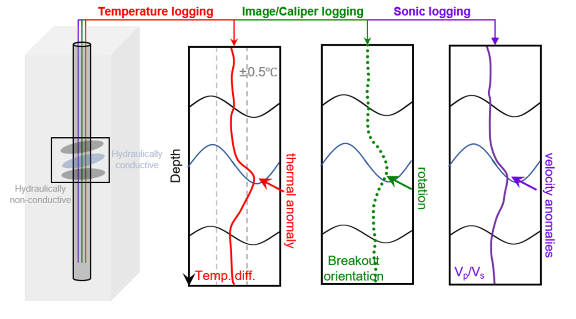
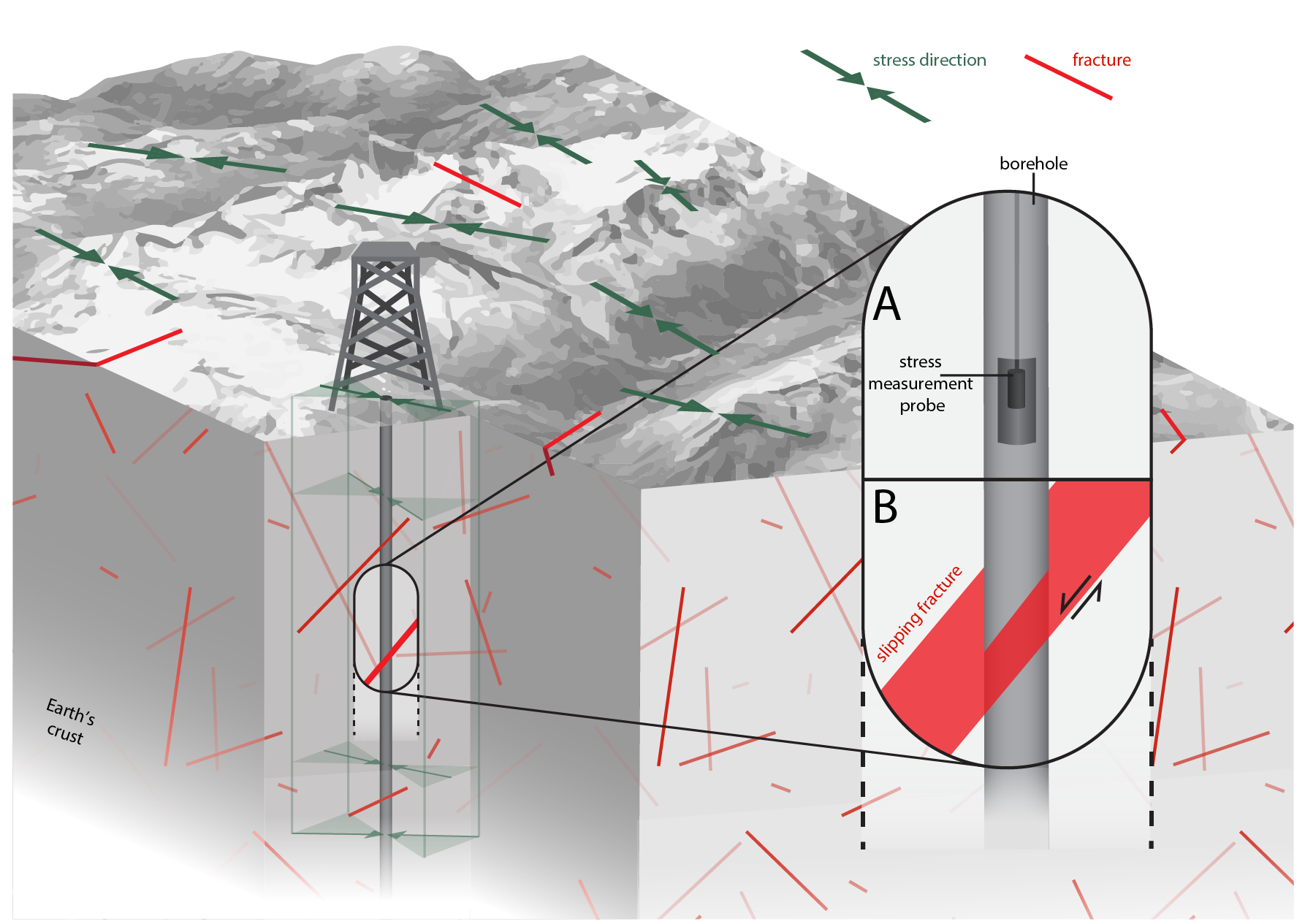
Profiling the in situ stress along deep boreholes is crucial for understanding crustal mechanics and facilitating subsurface exploration and developments. Existing approaches for borehole stress profiling often avoid natural fractures, because the stress field near fractures is challenging to measure and interpret. Here we present a novel approach to profile the in situ stress, primarily relying on the natural fractures intersected by deep boreholes. The critically-stressed natural fractures feature signatures identifiable on temperature log, while others do not. An abundant and diverse set of classified natural fractures is utilized for stress inversion. We illustrate this novel approach by re-visiting the KTB borehole data set. The natural fracture classification facilitated a two-stage stress inversion that efficiently profiles both the in situ stress magnitude and orientation. The inverted stress matches well with independent borehole observations that were costly to conduct, and provides additional information on the crustal strength variations. The inversion is further experimented on subsets of natural fractures along the KTB borehole in order to capture stress heterogeneity over smaller length scales. The limitation and scale-dependence of this novel approach is examined by integrating the fracture distribution and stress heterogeneity. Profiling in situ stress via natural fractures is feasible and complementary to existing approaches, and can offer new insights on the characteristics of crustal stress, its spatial heterogeneity, and its interactions with geological discontinuities.
CDL: A Robust Stress Inversion Framework for Complex Earthquake Sequences
CDL:面向复杂地震序列的稳健应力场反演方法
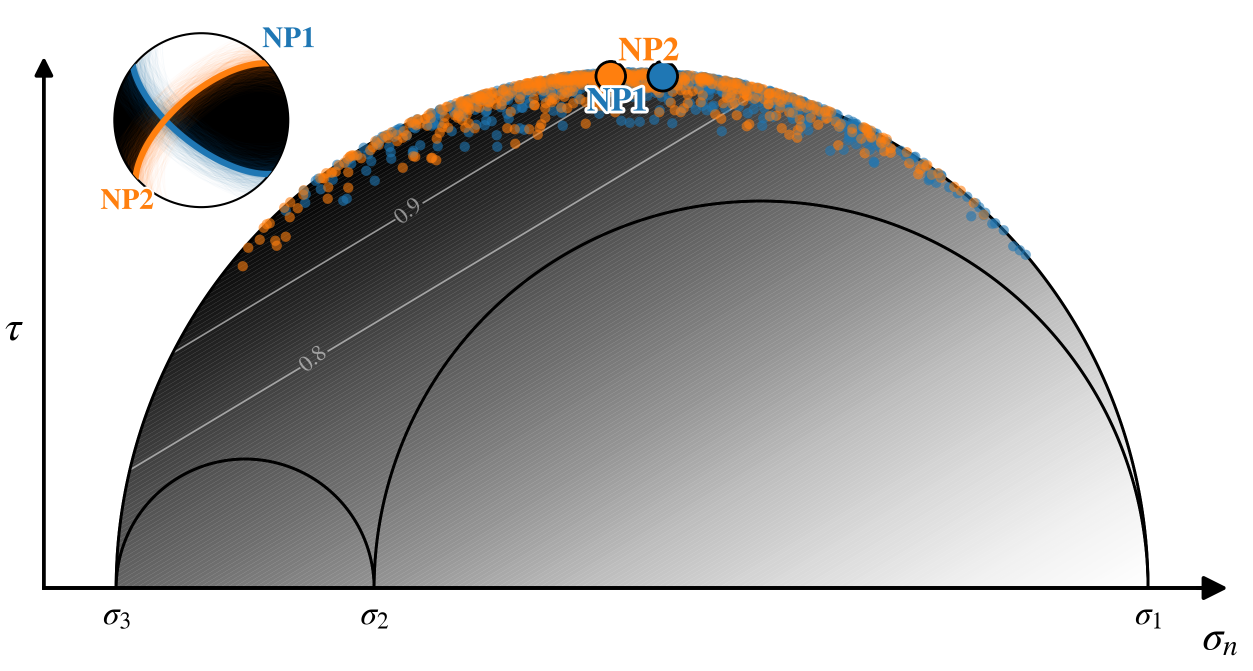
My research focuses on crustal stress inversion and the analysis of stress evolution in earthquake sequences using focal mechanism data. To address the limitations of conventional approaches in nodal-plane selection, focal-mechanism uncertainty, and structurally complex regions, I developed the CDL framework to improve the robustness and physical consistency of stress inversion. CDL integrates mechanical plausibility, slip-direction consistency, and nodal-plane uncertainty into a unified framework, allowing spatiotemporal stress variations to be resolved without prescribing the true fault plane in advance. This approach is applicable to major earthquake sequences, regional seismicity, and complex plate-boundary environments, roviding a useful tool for investigating postseismic stress adjustment, fault interaction, and the stress conditions associated with earthquake generation.
A novel three-dimensional rock mass strength criterion based on explicit micro-fracture deformation.
基于宏微观对应的连续介质力学理论推导多尺度岩体强度准则。
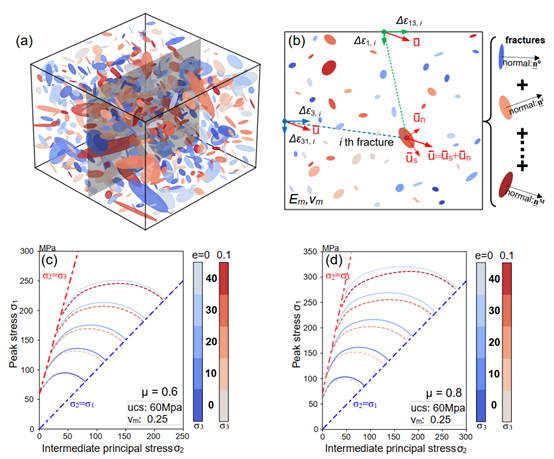
The strength criterion is essential for understanding rock engineering under diverse geological conditions and stress paths. However, traditional rock strength criteria, such as the Mohr-Coulomb (M-C) and Hoek-Brown (H-B) criteria, do not fully capture the failure characteristics of rock under complex three-dimensional stress conditions and lack physical significance in describing microscopic deformation and fracture mechanisms. Inspired by the Wiebols-Cook (W-C) criterion, we propose a novel three-dimensional strength criterion that explicitly considers the Coulomb frictional slip of micro-fractures during loading and uses the accumulated macroscopic additional strain energy caused by that slip as the threshold for the rock criterion. The proposed criterion is based on an equivalent continuum model of a three-dimensional discrete fracture network, making it adaptable to both intact rock and fractured rock masses at various scales. By adjusting the parameters of the fracture network, we analyze the effects of intermediate principal stress, fracture scale effects, and heterogeneity in the friction coefficient on rock strength. The strength predictions based on the proposed criterion show a high degree of agreement with true triaxial experimental results, demonstrating their accuracy and applicability. The influence of the intermediate principal stress arises from the non-uniform strain energy induced by micro-fractures and Coulomb slip. Furthermore, the increase in fracture scale and friction coefficient heterogeneity leads to a decrease in rock strength, with the fracture scale effect having a more significant impact. This study establishes a clear connection between macroscopic strength characteristics and microscopic physical mechanisms, offering new insights into cross-scale mechanical properties from intact rock to fractured rock masses. Additionally, it provides a quantitative basis for assessing rock mass stability in deep-earth engineering exploration, development, and operations.
Jiang, S.*, Ma, X.† and Mukuhira, Y., Kilometer-scale crustal stress inverted through diverse natural fractures - synthetic tests and real borehole applications, Rock Mechanics Bulletin. [DOI]
Kilometer-scale crustal stress inverted through diverse natural fracture data from deep boreholes
基于裂隙临界概率和导水性的相关性反演地应力。
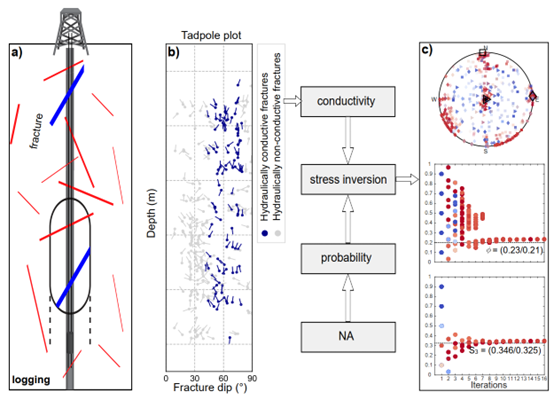
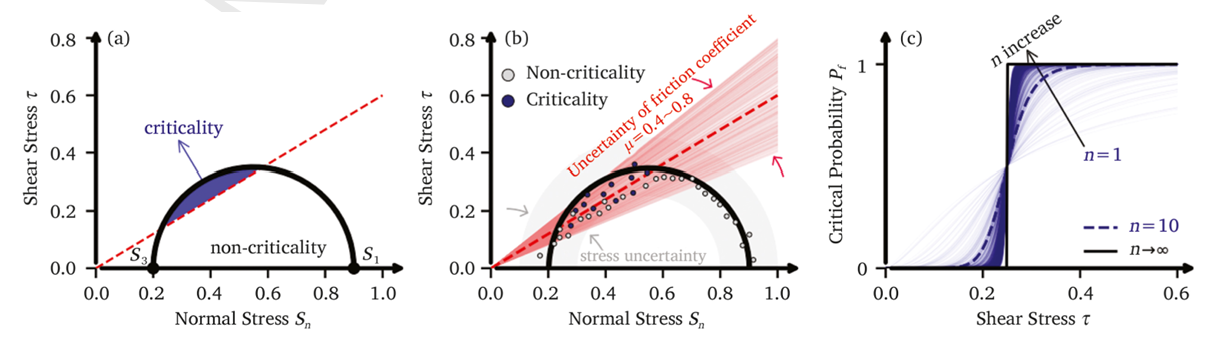
Natural fractures in the Earth's crust provide valuable insights into the crustal stress. Field studies have shown that critically stressed fractures are typically hydraulically conductive, whereas non-critical fractures rarely exhibit measurable flow. To capture fracture criticality and associated uncertainty, this study adopts a probabilistic criticality model rather than a binary Coulomb criterion. We develop a nonlinear inversion method to estimate kilometer-scale crustal stress by integrates hydraulic conductivity characteristics and orientation data from natural fractures in deep boreholes. The inversion employs the Neighborhood Algorithm to optimize the likelihood between calculated critical probability and hydraulic conductivity, yielding estimates of stress orientation and relative magnitude. To evaluate performance, we constructed a crustal rock mass model and generated synthetic datasets with varied fracture number, the ratio of hydraulically conductive to non-conductive fracture, and orientation diversity. We further applied the method to four kilometer-scale scientific boreholes: Cajon Pass, Long Valley, NTS, and KTB. The inverted stress states are consistent with independent stress measurements, confirm the accuracy of proposed stress inversion method and the correlation between fracture criticality probability and hydraulic conductivity. Due to its minimal data requirements and straightforward implementation, the proposed stress inversion method is well-suitable for various geological environments.
Refined Characterization and Analysis of Shallow Crustal Stresses Based on Hydraulic Fracturing Data
钻孔水压致裂和超声波成像数据分析,获取钻孔应力大小和方向
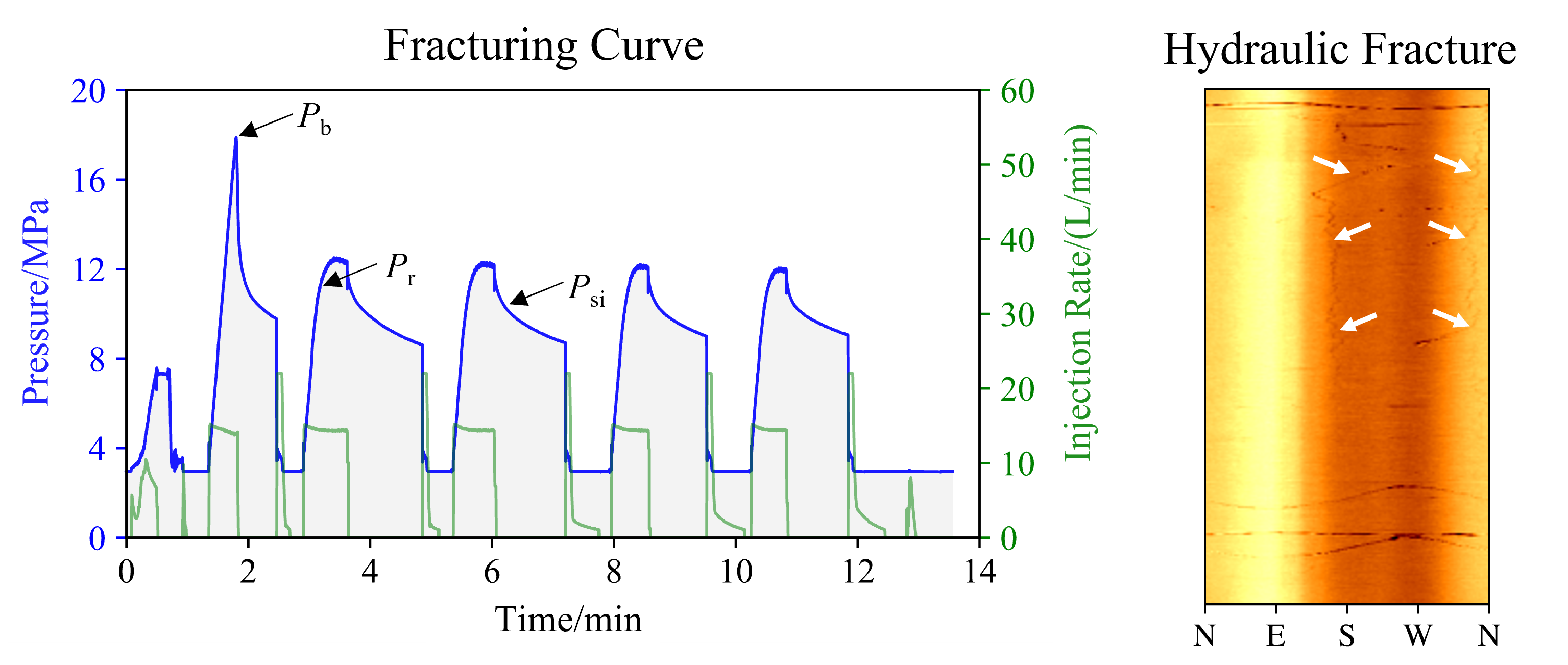
The characteristics of the shallow in-situ stress field are of great significance to the construction, safe operation and maintenance of underground engineering. Among various in-situ stress measurement methods, the hydraulic fracturing method has become one of the most widely used engineering techniques due to its simple operation, stable test results, and no requirement for pre-acquired rock mechanical parameters. Taking two engineering boreholes in south-central Guangdong as the research objects, this paper conducts systematic analysis based on hydraulic fracturing in-situ stress test data and ultrasonic imaging logging data, and accurately obtains the magnitude and spatial orientation of in-situ stress at the two borehole sites. On this basis, the stability of fractures around the boreholes is evaluated. The results show that the fractures in one borehole present a high risk of slip instability. It is necessary to emphatically monitor the dynamic variation of in-situ stress in this area during engineering construction, so as to ensure the overall stability and safety of underground engineering structures.
Investigation of the Borehole Stress Field Based on the Ellipticity Analysis Method
基于钻孔椭圆度分析法,对钻孔重复的超声波成像数据分析,研究连续的应力场特征
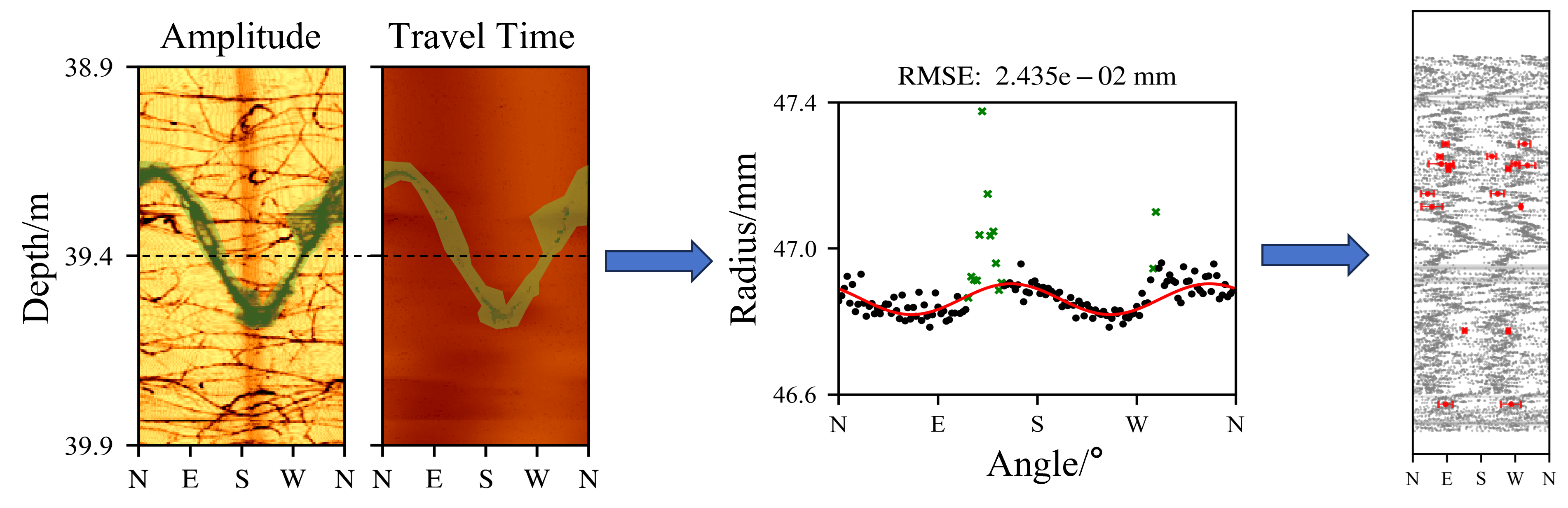
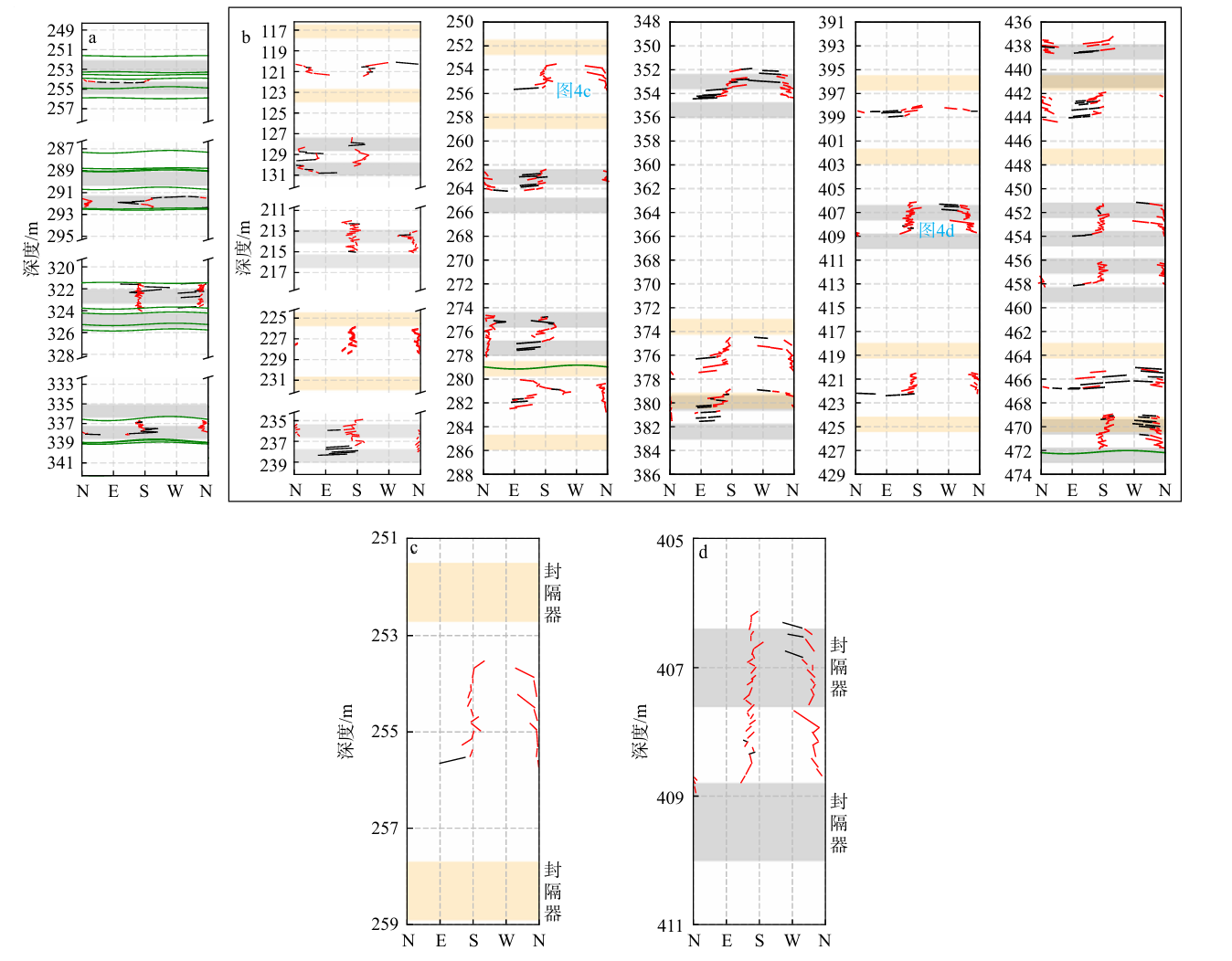
The borehole cross-section ellipticity analysis method can efficiently obtain continuous in-situ stress information and compensate for the lack of stress data in non-hydraulic fracturing intervals. In this paper, the QSZK borehole near the Shandong segment of the Tan-Lu Fault Zone is taken as the research object. Based on five sets of repeated ultrasonic borehole imaging data from this borehole, the cross-section ellipticity analysis method is adopted to interpret continuous ellipticity parameters such as the orientation of the minor axis and the axial ratio. The results show that the orientation of the minor axis of the borehole cross-section is consistent with the strike of hydraulic fractures within the studied interval. The overall dominant orientation of the minor axis is concentrated in the nearly EW direction, which is basically consistent with the measured in-situ stress direction of the borehole and the direction of the regional tectonic stress field. This study verifies the applicability of the cross-section ellipticity analysis method in in-situ stress research, which can provide an effective auxiliary means for borehole-scale in-situ stress field analysis.
Study on Spatiotemporal Heterogeneity of the Stress Field in the Changning Shale Gas Field, Sichuan
扩充长宁页岩气田的中小震震源机制解数量,进而获取该区域主应力方向、相对应力大小的更加精细的时间、空间变化
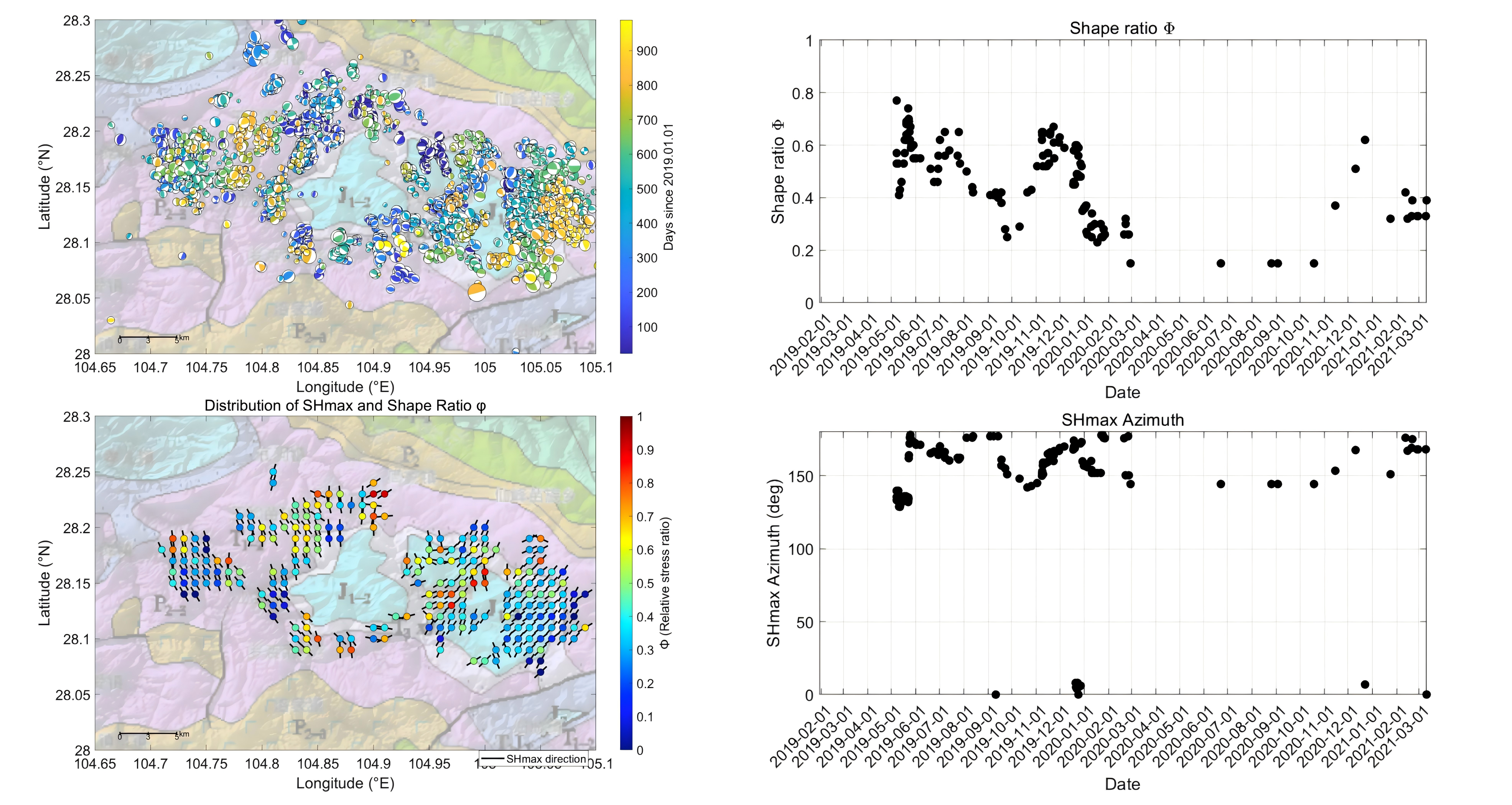
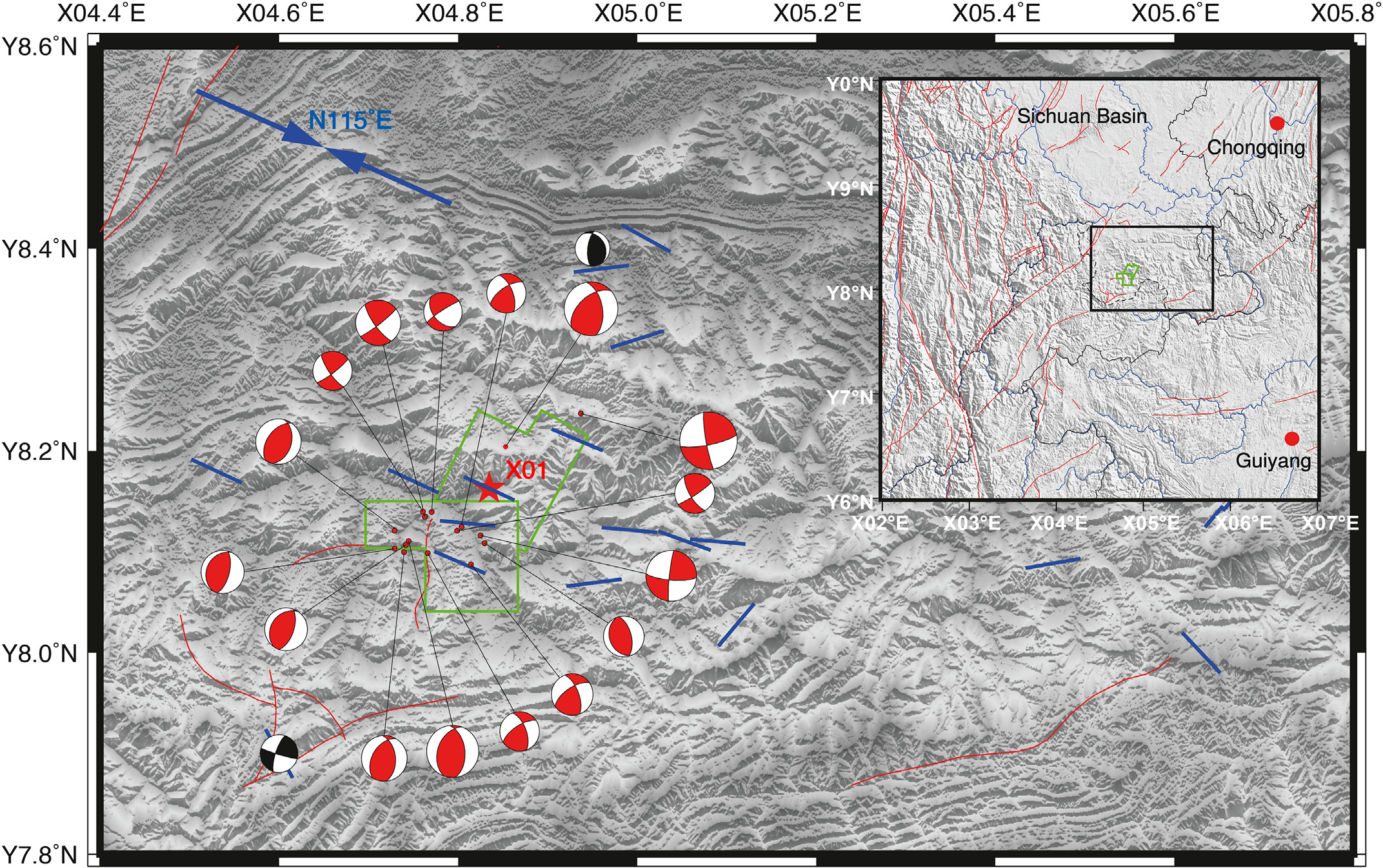
The Changning shale gas development area, located in the southern Sichuan Basin, is one of the earliest shale gas fields in China to enter commercial production. Complex geological structures and long-term fluid injection have led to frequent seismicity and a highly heterogeneous stress field. In this study, using data from 17 seismic stations successively deployed by the University of Science and Technology of China between January 2019 and June 2022, we jointly utilize S/P amplitude ratios and Z‑component waveform information to invert for a large number of focal mechanism solutions spanning the three‑and‑a‑half‑year observation period, substantially expanding the focal mechanism catalog for the Changning area. After applying quality control to these focal mechanisms, a sliding‑window stress inversion in both space and time is performed on them to resolve the local spatiotemporal variations in the orientations of the three principal stresses and the shape ratio ($\phi = \frac{S_2 - S_3}{S_1 - S_3}$) against the background of an overall NWW‑SEE trending tectonic stress field in the Changning area.
Mask-Constrained Artifact-Aware Residual Restoration for Groove Artifact Suppression in Acoustic Televiewer Images
利用掩膜约束残差修复抑制声波电视图像沟槽伪影,提升井壁图像解释与自动分析可靠性
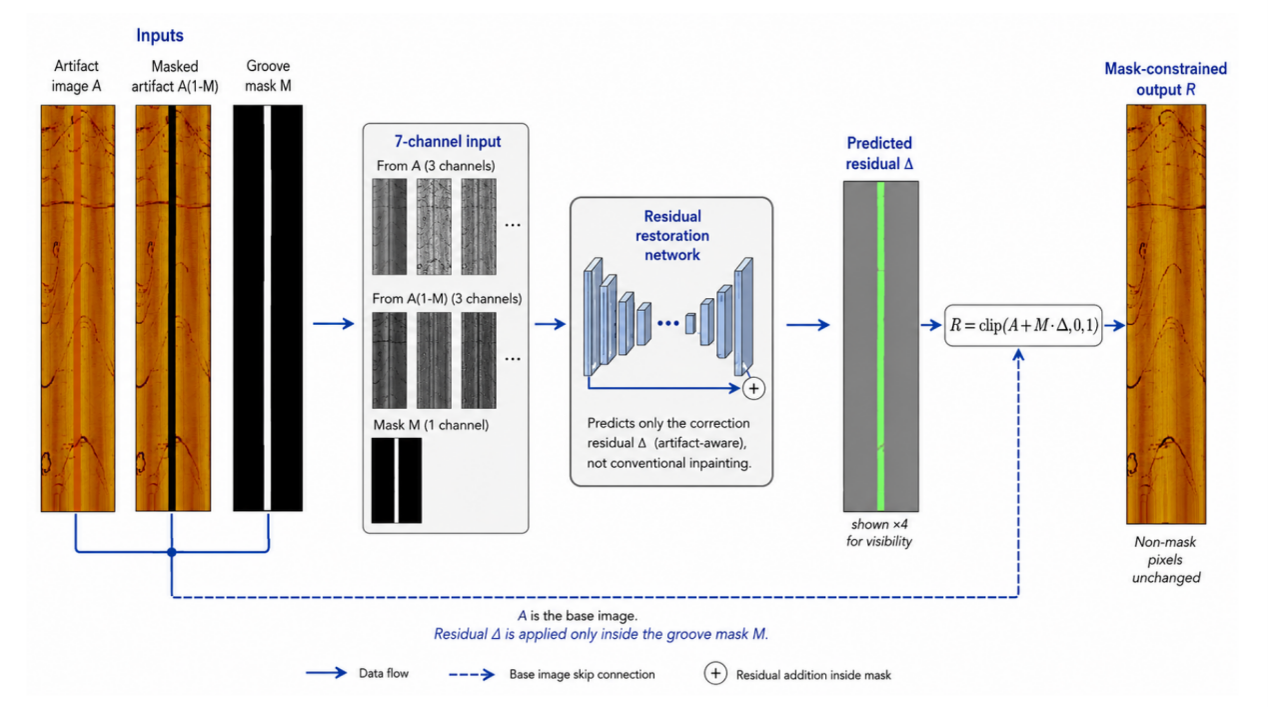
High-quality acoustic televiewer (ATV) images are essential for continuous borehole-wall interpretation, including fracture identification, structural analysis, and subsequent automated processing. However, vertical groove artifacts often introduce local brightness and pseudocolor distortions in ATV images, producing stripe-like anomalies that may obscure geological textures and affect both visual interpretation and machine-based analysis. Unlike ordinary image inpainting problems, the groove region is not a completely missing area, but a polluted observation that still preserves useful borehole-wall information. To address this problem, we formulate groove suppression as mask-constrained residual restoration. The proposed framework takes the artifact image, a masked-context image, and the groove mask as a seven-channel input, and predicts an RGB correction residual that is added only inside the detected groove region. This design suppresses the groove artifact while structurally preserving pixels outside the mask and retaining as much observed geological texture as possible. Because real ATV groove images usually lack clean references, we further develop a palette-guided synthetic groove generation strategy based on palette-coordinate compression to construct paired training data. Mask-focused luminance and correction losses are used to encourage sufficient restoration of the narrow groove band. Experiments on synthetic paired ATV data show that the method substantially reduces mask-inside RGB and luminance errors, while comparisons with ordinary LaMa and traditional interpolation/inpainting baselines demonstrate the advantage of treating the groove as a polluted observation rather than a missing hole. For real ATV images without ground truth, proxy metrics and visual inspection are jointly used to assess groove suppression, mask-confined correction, and possible residual artifacts. This study provides a controllable image-restoration workflow that improves the reliability of ATV image interpretation and supports downstream automated analysis of borehole-wall structures.
Comparison of well log based models of in situ stress estimation: applicability to unconventional reservoirs
基于测井的地应力估算模型比较:对非常规油藏的适用性
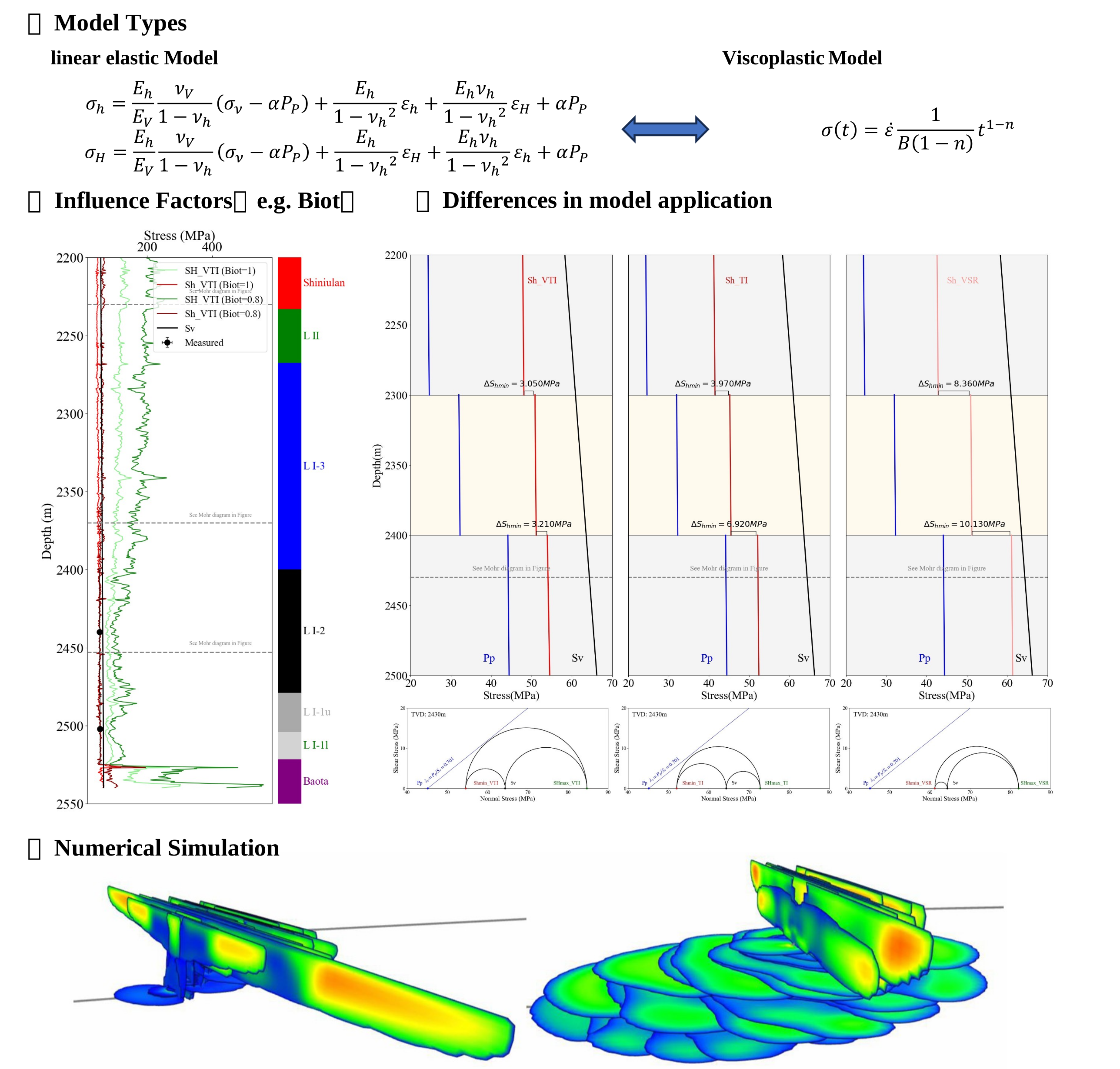
This research focuses on the core scientific and engineering demands for the efficient development of unconventional oil and gas reservoirs, concentrating on two core directions: precise characterization of the stress field and regulation of the expansion laws of hydraulic fracturing fractures. It conducts systematic research by reviewing the theoretical systems and applicable boundaries of mainstream stress calculation models such as isotropic (ISO), transversely isotropic (VTI), and viscoplastic stress relaxation (VSR) models. It quantitatively analyzes the control mechanisms of key factors such as pore pressure, effective stress coefficient, anisotropy of elastic parameters, and creep parameters on the prediction results of stress. It clarifies the model adaptation criteria under different rock types and geological backgrounds: in organic-rich clay-rich shale reservoirs, the VSR model can more accurately reproduce the real stress state formed by long-term geological evolution, while the traditional linear elastic model still has stable applicability and engineering application value in other rock types reservoirs. Based on this, by combining the measured data from typical oil and gas blocks at home and abroad and the numerical simulation of hydraulic fracturing, the study clarifies the core controlling effects of inter-layer stress differences, reservoir thickness, and stress state of the formation on the expansion behavior of hydraulic fractures, and establishes a correlation method for precise stress characterization and optimized design of fracturing. The research results can provide systematic theoretical support and technical guidance for engineering applications such as optimizing fracturing schemes, well pattern deployment, risk prevention and control (induced earthquakes), and underground gas storage of unconventional oil and gas reservoirs.
A rock mass stress relaxation model based on DFN statistical characterization and macro-microscopic iteration
基于DFN统计特征与宏-微观迭代的岩体应力松弛模型
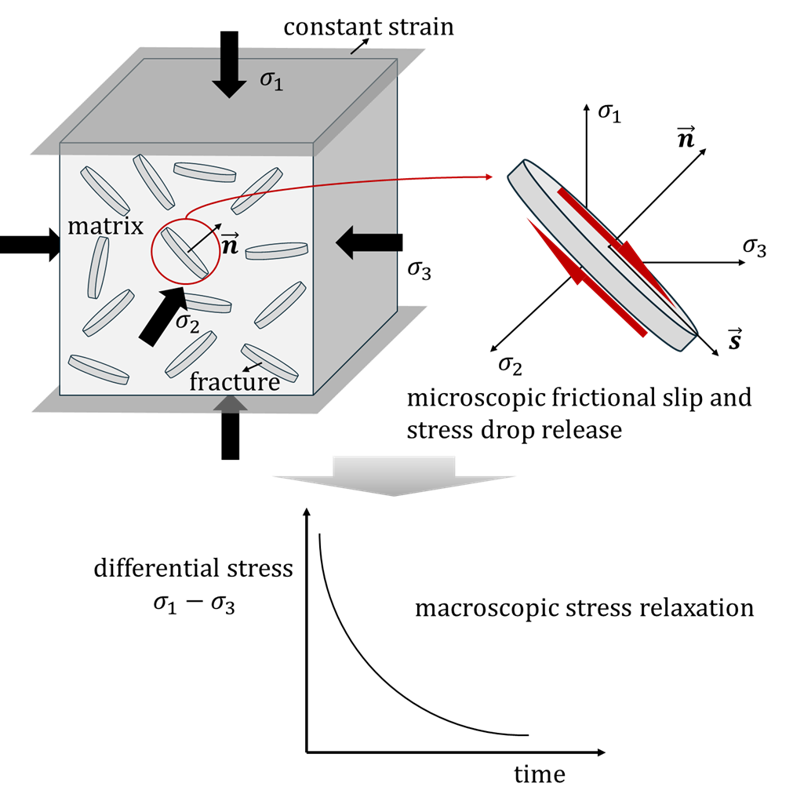
The stress relaxation process of rocks is critical for controlling the time-dependent stability of underground engineering. However, existing stress relaxation models largely rely on macroscopic phenomenological laws, making it difficult to explicitly couple the statistical characteristics of microscopic fractures with macroscopic stress relaxation. We established a stress relaxation model based on Discrete Fracture Network (DFN) statistical characterization and macro-microscopic iteration. Using a homogenization method, the model achieves the cross-scale projection of fracture frictional slip response. Under constant horizontal stress and constant vertical strain boundary conditions, the model implements a self-adjustment process involving microscopic critical fracture identification, macroscopic stress relaxation, and damage accumulation through discrete iterative time steps. We specifically demonstrate the effects of different friction coefficients and principal stresses on the degree of stress relaxation, relaxation modulus, and damage evolution characteristics of the model. Furthermore, we reveal the fundamental mechanism by which the intermediate principal stress indirectly regulates the stress relaxation rate by adjusting the critical fracture ratio. Additionally, the model's stress relaxation results are highly consistent with experimental results from stress relaxation triaxial tests. This model quantitatively confirms and extends the concept that macroscopic stress relaxation is driven by internal stress drop release within rock masses, and provides a theoretical basis for large-scale underground rock mass stress evolution.
Physics-Informed In-Situ Stress Prediction Integrating Continuous Well-Log Representations and Sparse DFIT Constraints
融合连续测井表征与稀疏 DFIT 约束的物理信息地应力预测
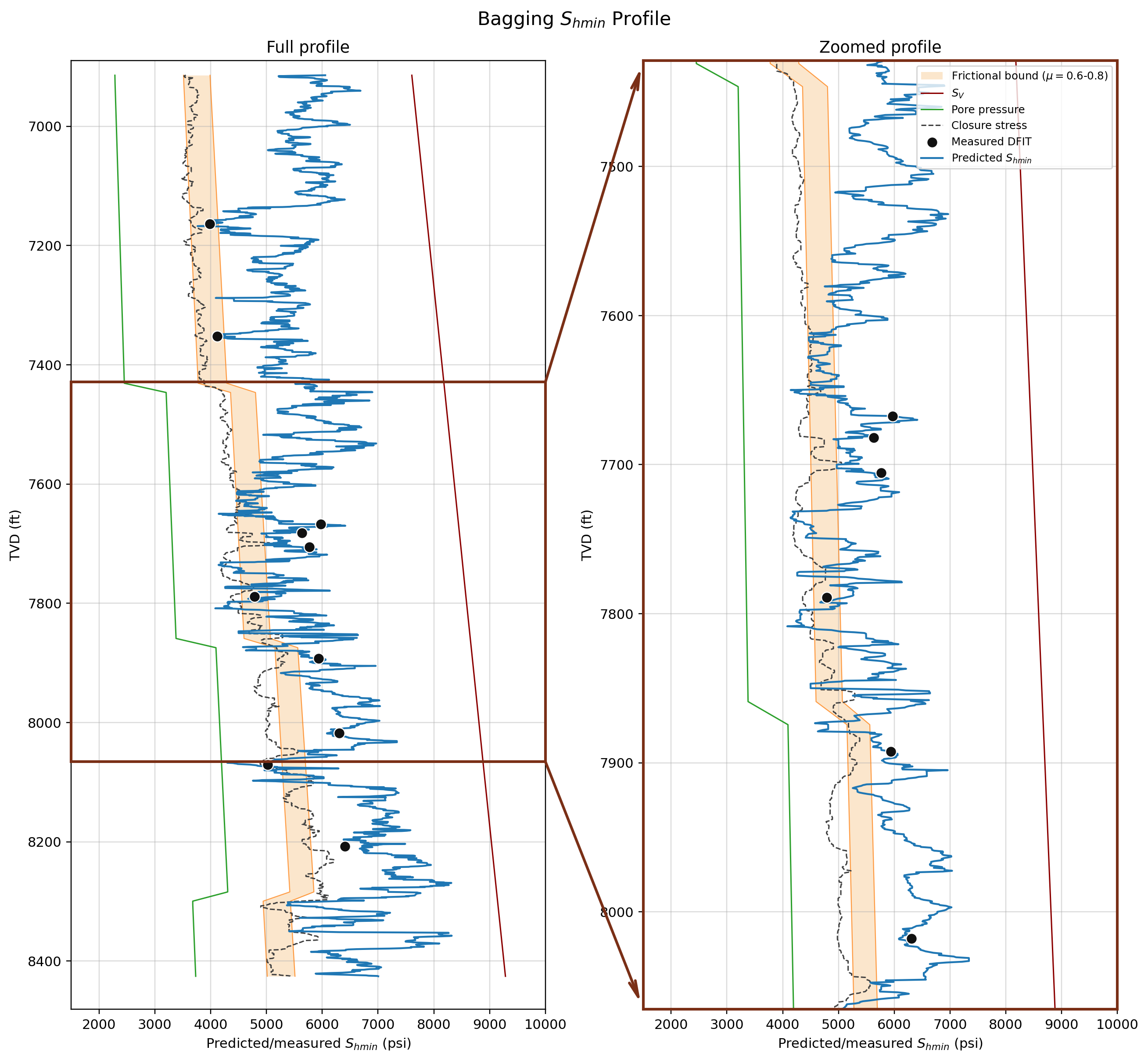
Continuous well logs provide high-resolution vertical information on lithology, mineral composition, pore structure, and elastic properties, but they do not directly measure in-situ stress. DFIT-derived stress measurements provide more direct stress constraints, yet they are sparse and subject to interpretation uncertainty. To address this mismatch between continuous indirect log information and sparse direct stress constraints, a physics-informed probabilistic workflow is developed for reconstructing continuous minimum horizontal stress, $S_{\mathrm{hmin}}$, profiles. The workflow integrates well-log sequence representation learning with posterior updating from sparse DFIT-derived stress constraints, while incorporating geomechanical bounds associated with the frictional lower limit, the vertical-stress upper bound, and stress-relaxation concepts. By learning lithologic and stratigraphic controls on $S_{\mathrm{hmin}}$ and explicitly accounting for stress-measurement uncertainty, the proposed framework enables small-sample, multivariate, interpretable, and uncertainty-aware prediction of continuous $S_{\mathrm{hmin}}$ profiles.
Understanding the Regional Stress in Active Tectonic Regime Using 3D Numerical Modeling, Case Study of BedrettoLab, Switzerland
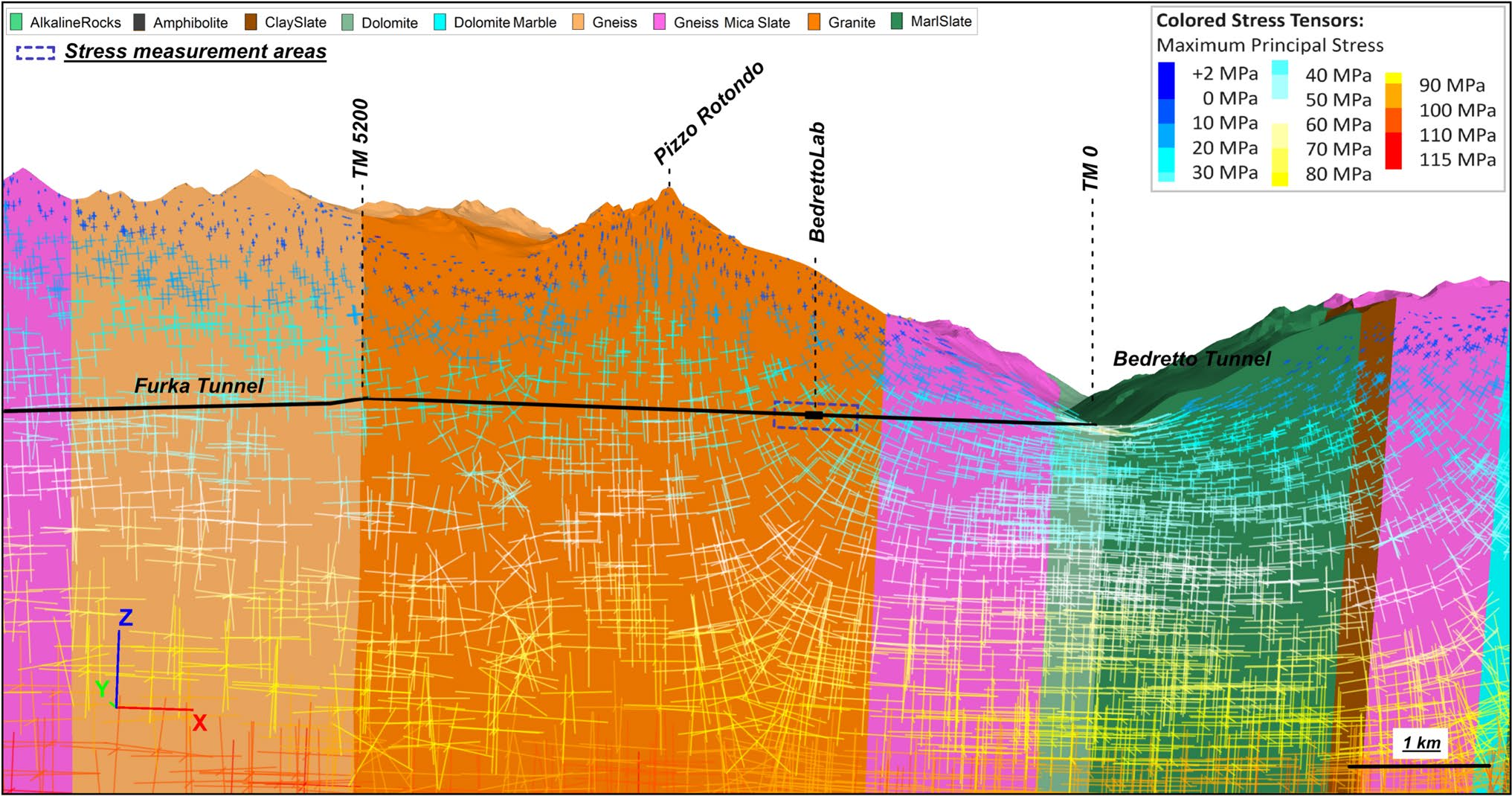
Understanding in-situ stress magnitudes and orientations is critical for the design of underground engineering projects, including tunnels, geological nuclear waste repositories, and enhanced geothermal systems (EGS). This study presents the results of a regional 3D numerical stress model developed using FLAC3D, created to analyze stress variations along the Bedretto Tunnel in the southern Switzerland. The Bedretto Tunnel is a new underground research facility designed to host in-situ experiments related to deep geothermal energy utilization, earthquake physics, and tunneling, with each field relying on robust estimates of stress magnitudes and orientations. The model considers the effects of topography, active tectonic stresses, and rock properties to assess local and regional stress patterns. The model is first calibrated against local in-situ stress measurements obtained via the mini-frac method conducted near the BedrettoLab. By evaluating the characteristics of the excavation damage zone (EDZ) around the Bedretto Tunnel, we were able to further validate the simulated stress states along the tunnel. After calibration, we analyze the in-situ stress variations in the surrounding area to evaluate the impact of topography and active stress on the local stress distribution. Modeling results reveal that stress magnitudes and orientations along the tunnel are strongly influenced by topography and tectonic forces, transitioning from strike-slip faulting near the portal (TM 0-1900) to normal faulting (TM 1900-5200). The results also show that topography influences stress orientation: at shallow to intermediate depths (up to 1.5 km), principal stresses are non-vertical, transitioning to more vertical and horizontal orientations at greater depths. The results indicate that the K-ratio (horizontal to vertical stress) depends on topography, exhibiting a wide range at shallow depths and tending toward unity at greater depths. Although the modeling results capture the overall variations of the stress state in the Bedretto region and can serve as a potential base model in this region, the local stress heterogeneity observed from in-situ stress measurements could not be modeled, highlighting the necessity of incorporating geological structures, including faults and fractures, as well as tunnel-induced perturbations.
Hydromechanical characterization of a fractured crystalline rock volume during multi-stage hydraulic stimulations at the BedrettoLab
Multi-stage hydraulic stimulation experiments were conducted at the Bedretto Geothermal Testbed (Switzerland) at a depth of over 1km to study seismo-hydromechanical processes at the hectometer scale. Eight intervals with a total length of 206m were stimulated within a densely monitored, fractured granitic rock volume. Geological characterization shows that all intervals contain NE-SW striking, steeply dipping fractures, but the transmissivity and natural inflow vary between intervals. Reactivation pressures estimated from injectivity increases during stimulation indicate shear reactivation rather than hydraulic jacking, suggesting reactivation of pre-existing non-filled fractures. Overall, the seismo-hydromechanical response to stimulation is heterogeneous and indicates channelized flow.
Constraining the stress field and its variability at the BedrettoLab: Elaborated hydraulic fracture trace analysis
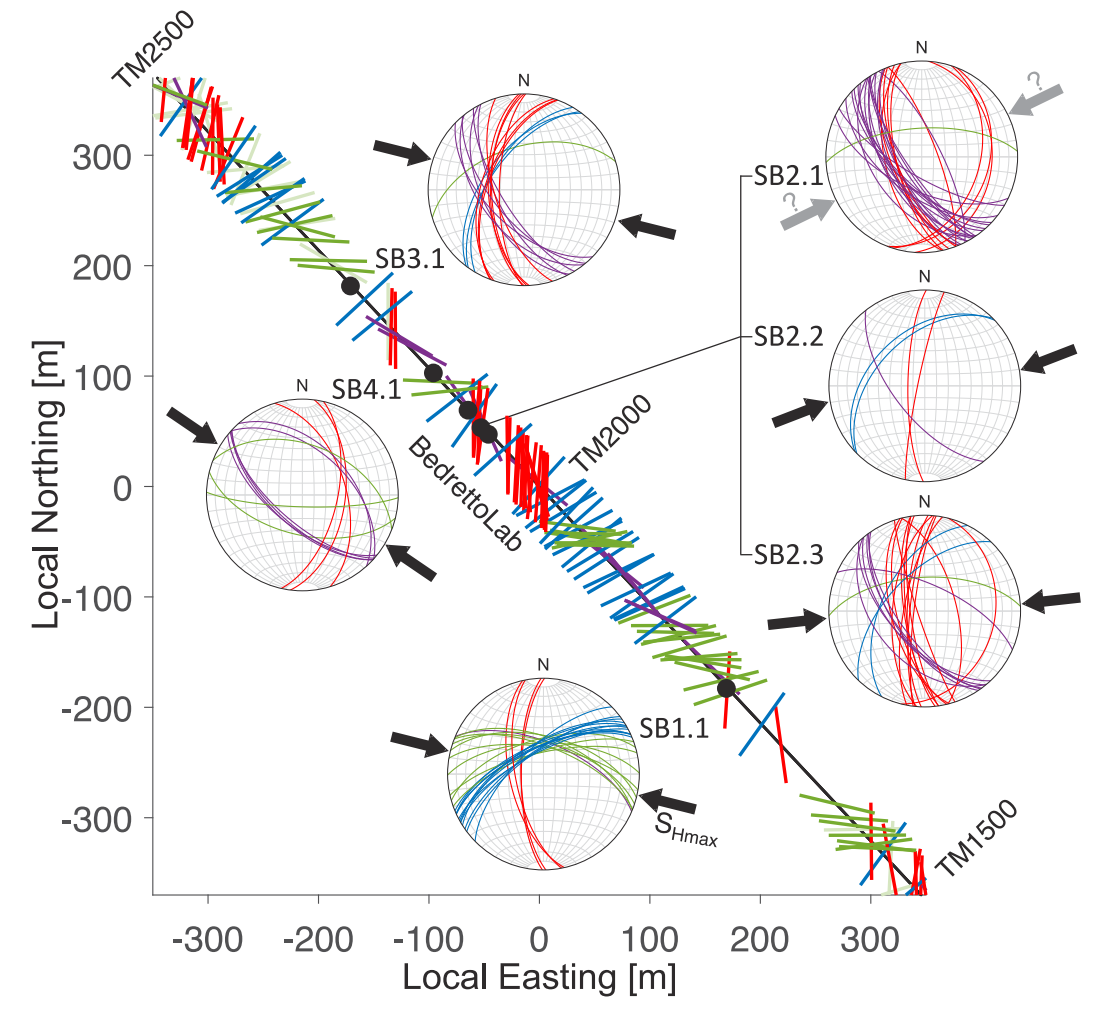
The measurement of the stress field and its natural heterogeneity is a common challenge in the field of geophysics and underground engineering. This study presents findings from an extensive mini-frac campaign conducted at the Bedretto Underground Laboratory (BedrettoLab) in the Swiss Alps. Six dedicated stress measurement boreholes, spanning 500m along the Bedretto Tunnel, were utilized to prepare for meso-scale hydraulic stimulation experiments in a granitic rock volume. A detailed analysis of the induced hydraulic fracture trace morphology was carried out using acoustic televiewer logging data, with an interpretation based on the local geological context. The results show that the far field orientation of the maximum horizontal stress $S_{\mathrm{Hmax}}$ is on average $N112^\circ E$ and the overburden stress can be assumed to be a principal stress direction. However, the en-echelon shape of the observed hydraulic fracture traces suggests that there is a slight inclination of the greatest principal stress away from the vertical stress direction. The mini-frac test intervals along boreholes inside the enlarged niche of the BedrettoLab indicate a counterclockwise rotated horizontal stress by up to $37^\circ$ and potentially stronger inclination of the greatest principal stress from the vertical stress direction. The most likely causes of this stress field rotation, along with a considerably larger scatter in stress magnitudes, appear to be the larger laboratory niche dimensions compared to the tunnel and the presence of natural fractures that are preferentially oriented for slip in the far field stress state. Although the uncertainties and variability of the stress field around the BedrettoLab are not yet fully understood, our results are useful for strategic planning and design of meso-scale stimulation experiments in the rock volume. Furthermore, our detailed analysis procedure contributes to advancing the understanding of mini-frac tests in similar geological settings.
Fault Zone Spatial Stress Variations in a Granitic Rock Mass: Revealed by Breakouts Within an Array of Boreholes
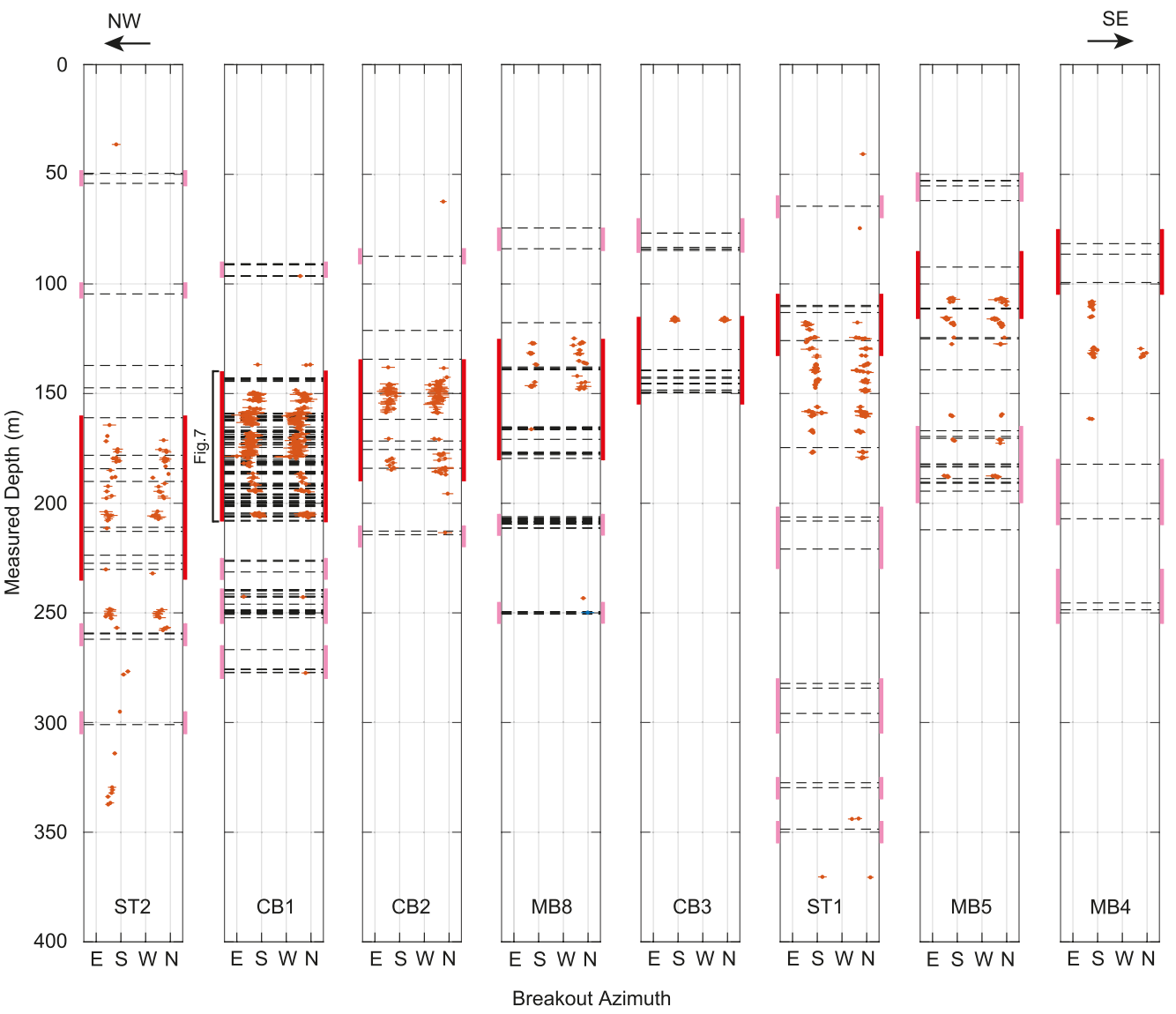
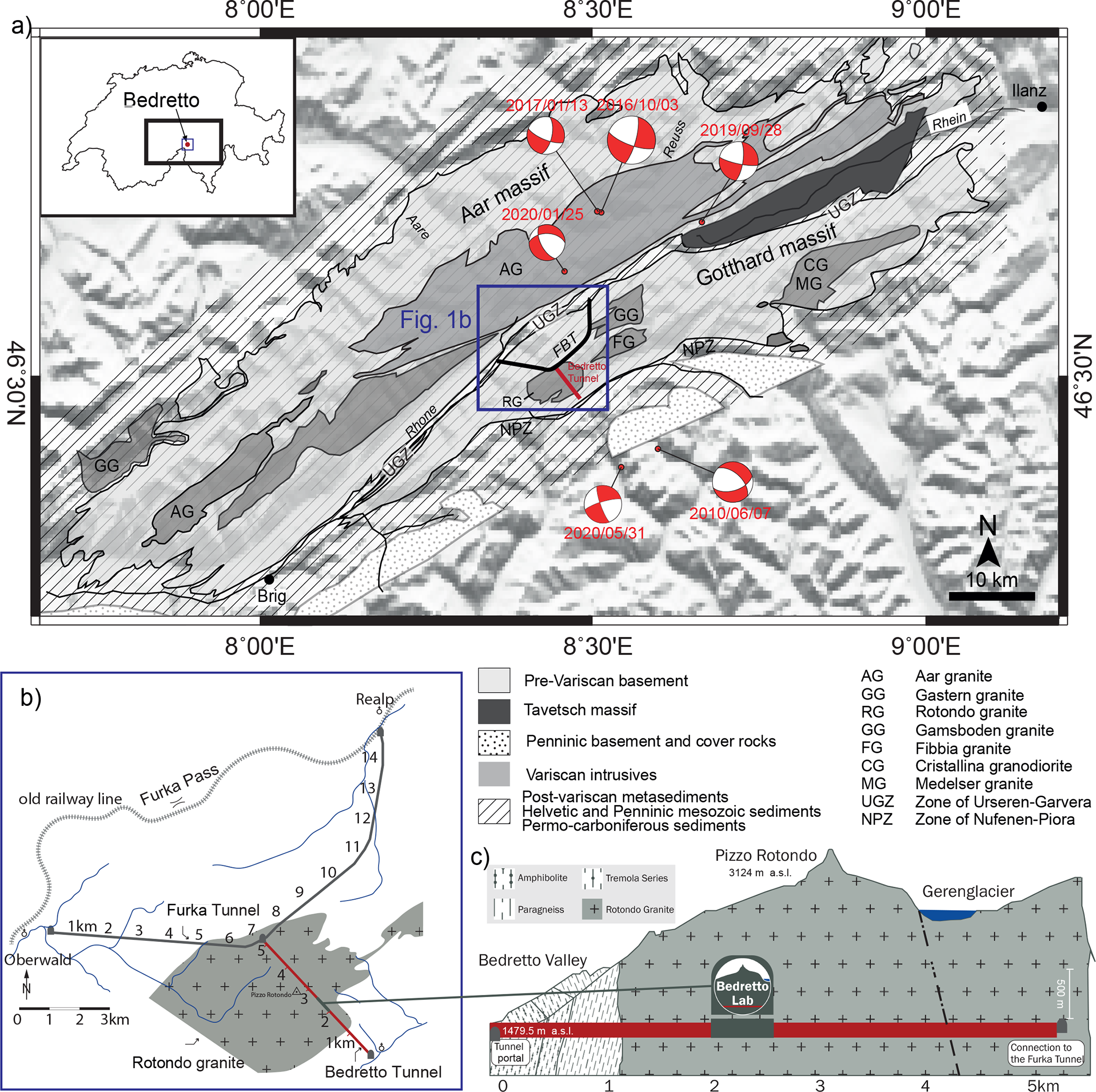
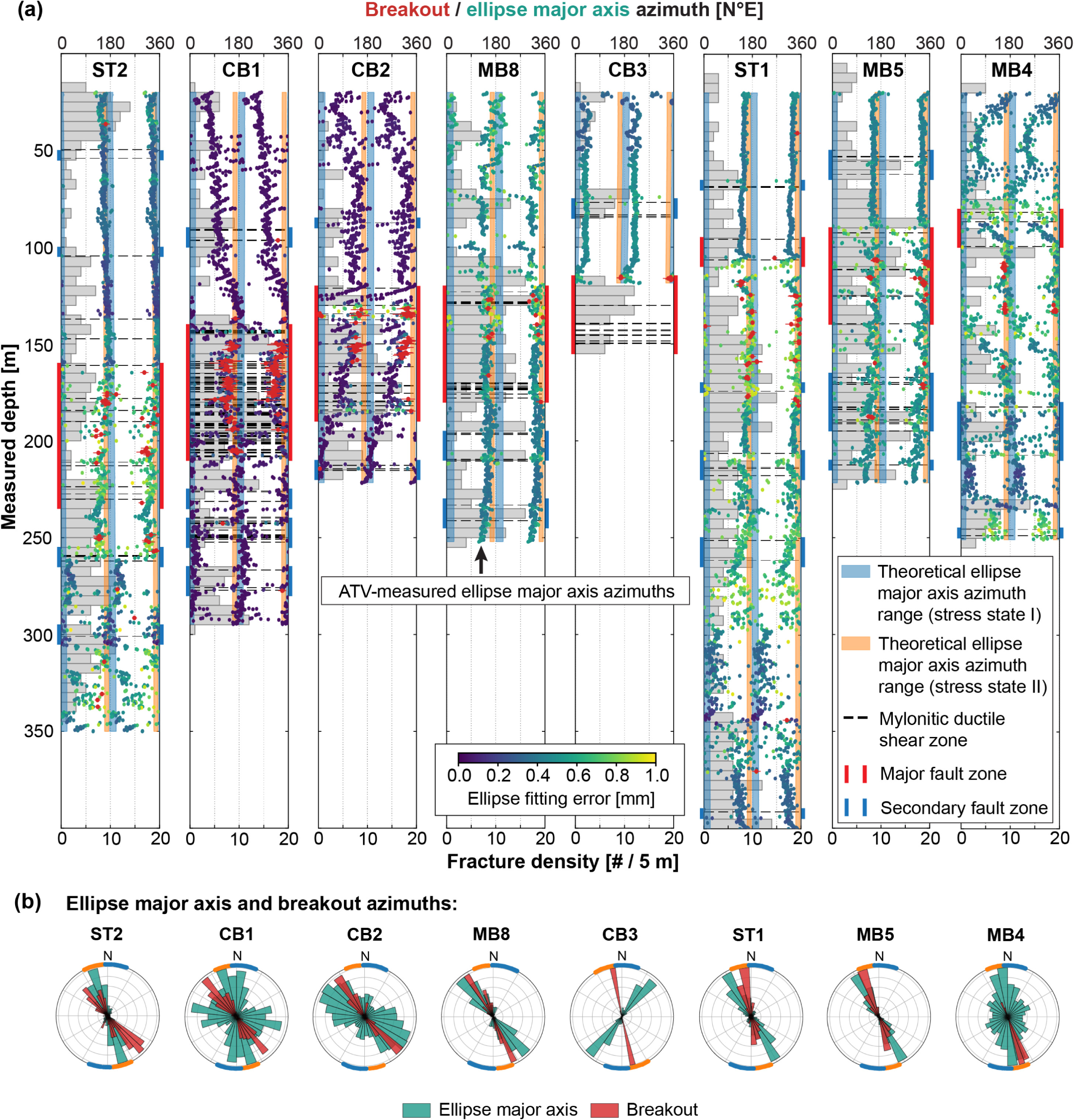
The in-situ stress state within fault zones is technically challenging to characterize. At the Bedretto Underground Laboratory in the Swiss Alps, the breakouts observed in an array of eight inclined boreholes penetrating a fault zone offer a unique opportunity to characterize the fault-associated spatial stress variations. Synthesizing multiple geophysical logs, natural geologic structures intersecting these boreholes are identified, revealing a hierarchy of a major fault zone along with secondary structures. Within the boreholes, breakout rotations occur over multiple scales, spanning individual fractures and the entire major fault zone. We first estimate and rule out the effect of the fracture-induced anisotropy on the breakout rotations, which are attributed mainly to the stress variations. Based on the stress field around a circular borehole and Mohr-Coulomb failure criterion, the observed breakout azimuths are used to invert the stress information. Results show that the stress field outside the fault zone features a stress ratio (quantifying the relative stress magnitude) of about 0.9, an inclined overburden stress (inclination: $12^\circ\sim18^\circ$), and a maximum horizontal principal stress ($S_{\mathrm{Hmax}}$) oriented $N100^\circ\sim120^\circ E$. Within the fault zone, a substantial reduction of the stress ratio and complicated stress rotations are constrained, likely induced by the stress drop on local fractures. As a result, less critical stress state inside the major fault zone is expected. Our work provides a semi-quantitative estimation of the in-situ stress variations around fault zones in the absence of direct stress measurements, which is beneficial to a number of scientific and engineering applications.
Permeability evolution during pressure-controlled shear slip in saw-cut and natural granite fractures
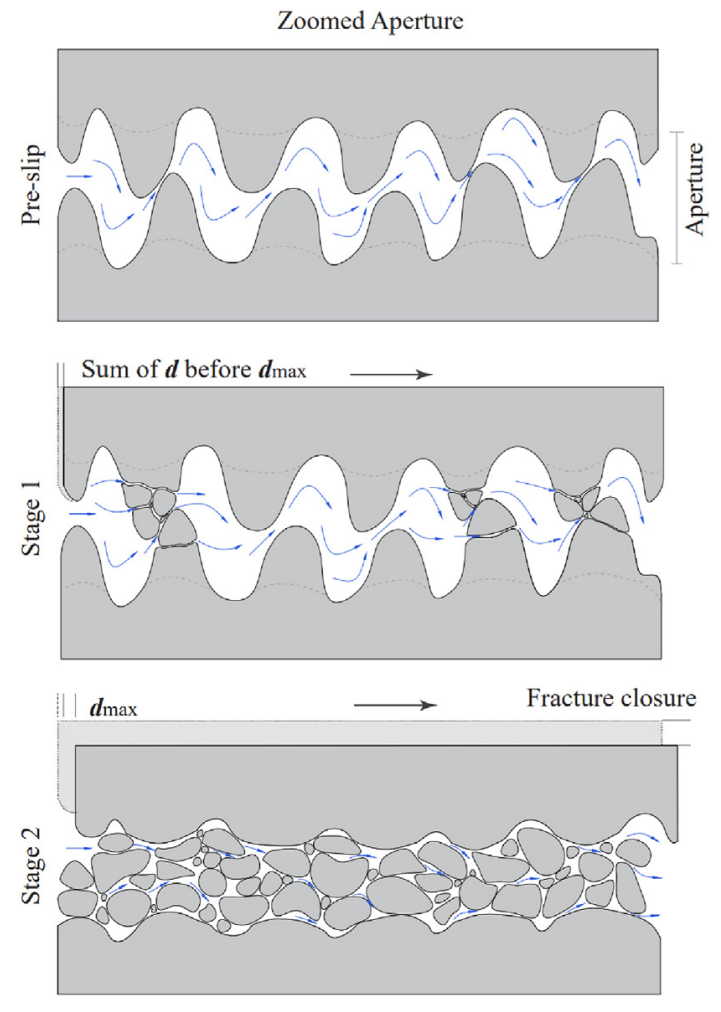
Fluid injection into rock masses is involved during various subsurface engineering applications. However, elevated fluid pressure, induced by injection, can trigger shear slip(s) of pre-existing natural fractures, resulting in changes of the rock mass permeability and thus injectivity. However, the mechanism of slip-induced permeability variation, particularly when subjected to multiple slips, is still not fully understood. In this study, we performed laboratory experiments to investigate the fracture permeability evolution induced by shear slip in both saw-cut and natural fractures with rough surfaces. Our experiments show that compared to saw-cut fractures, natural fractures show much small effective stress when the slips induced by triggering fluid pressures, likely due to the muchrougher surface of the natural fractures. For natural fractures, we observed that a critical shear displacement value in the relationship between permeability and accumulative shear displacement: the permeability of natural fractures initially increases, followed by a permeability decrease after the accumulative shear displacement reaches a critical shear displacement value. For the saw-cut fractures, there is no consistent change in the measured permeability versus the accumulative shear displacement, but the first slip event often induces the largest shear displacement and associated permeability changes. The produced gouge material suggests that rock surface damage occurs during multiple slips, although, unfortunately, our experiments did not allow quantitatively continuous monitoring of fracture surface property changes. Thus, we attribute the slip-induced permeability evolution to the interplay between permeability reductions, due to damages of fracture asperities, and permeability enhancements, caused by shear dilation, depending on the scale of the shear displacement.
Determination of the crustal friction and state of stress in deep boreholes using hydrologic indicators
We apply binary logistic regression to correlate fracture shear-slip criticality to hydraulic conductivity using data from four deep scientific boreholes in fractured crystalline rocks. In each borehole, an optimized decision boundary is obtained by maximizing the joint probability of classifying all fractures in consideration as critical or not. All four cases feature an optimized decision boundary close to the empirical rock friction ( 0.6), corroborating the applicability of laboratory-derived friction coefficients to faults in-situ. Utilizing this statistical technique, we demonstrate that one can determine the in-situ stress orientation and relative magnitude based only on whether fractures of varied orientations are hydraulically conductive, or not. The stress inversion results are consistent with independent stress measurements in each of the four case studies.
Lithology-controlled stress variations of Longmaxi shale - Example of an appraisal wellbore in the Changning area
The Longmaxi shale is an extensive, prolific unconventional play in southwestern China. Its development in the Changning area is affected by ineffective hydraulic fracturing (HF) stimulation, fault reactivation and casing damage. It is suspected that the stress contrast within and between the shale reservoirs and the formations above and below matters to hydraulic fracture propagation and reservoir stimulation. To this end, the Longmaxi shale in the Changning area deserves a dedicated quantification of the in-situ stress state and its variations. In this study, we re-visit the available data from one of the play's first appraisal wellbores (X01) for an integrated geomechanics study, focusing on profiling the stress across the Longmaxi and its adjacent formations. Combining geophysical logs and other stress in dicators, we re-interpret its stress profile in the context of lithological variations. The resulting stress variations are modeled primarily through a viscoplastic stress relaxation framework, compared with the results via the frictional equilibrium and an elastic theory (the Extended Eaton model). We offer some discussions on the differences and similarities of these stress profiling methods, and examine their applicability to Longmaxi shale in the Changning area. Our objective is to connect the lithology-controlled stress variations to the first-order complexities (HF ineffectiveness and fault reactivation) that have been observed in the area to date.
Modeling flow and heat transfer of fractured reservoir: Implications for a multi-fracture enhanced geothermal system
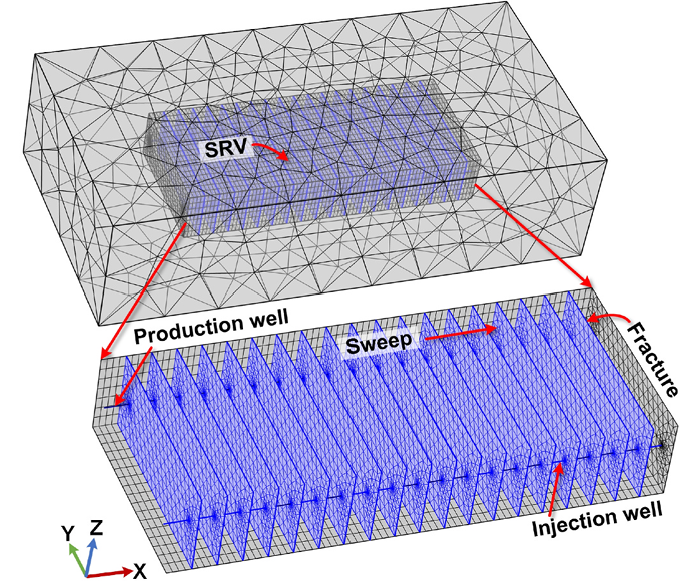
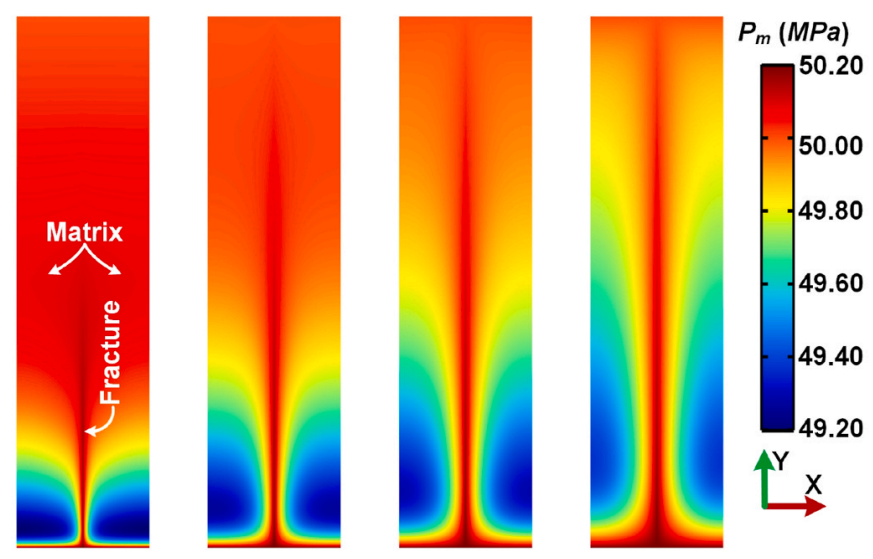
The EGS (enhanced geothermal system), particularly the multi-fracture EGS, is expected to be a key method to effectively develop the deep geothermal resource. The accurate modeling of flow and heat transfer in an EGS reservoir, particularly the fracture, is challenging. Therefore, an improved model considering the LTNE (local thermal non-equilibrium) and non-Darcy flow in a rough fracture is proposed. Then, the flow and temperature fields in the matrix are comprehensively investigated. The relationship between matrix and fracture is analyzed. The LTNE and LTE (local thermal equilibrium) are compared to determine the specific thermal process in the fracture. The difference between non-Darcy and Darcy flow in the fracture is studied to evaluate the actual flow behavior. The influences of the rough and smooth fractures are discussed. The results show that the direct contribution of the fracture to production is close to 100%, while the matrix mainly plays an indirect role as a heat source. There is a noticeable local low-pressure region induced by fluid density change in the matrix, while the heat conduction, especially rock conduction, dominates the heat transfer of the matrix. The intense heat convection in the fracture leads to a heat transfer rate difference of up to 5000 times compared with the heat conduction of the matrix, causing a marked thermal breakthrough. The non-Darcy flow represents the actual flow in the fracture, and the velocity is significantly lower than the Darcy flow velocity when a high injection flow rate is employed in the EGS production. The total extracted heat difference between rough and smooth fractures reaches 7.51%.
Multi-disciplinary characterizations of the BedrettoLab a new underground geoscience research facility
The increased interest in subsurface development (e.g., unconventional hydrocarbon, engineered geothermal systems (EGSs), waste disposal) and the associated (triggered or induced) seismicity calls for a better understanding of the hydro-seismo-mechanical coupling in fractured rock masses. Being able to bridge the knowledge gap between laboratory and reservoir scales, controllable meso-scale in-situ experiments are deemed indispensable. In an effort to access and instrument rock masses of hectometer size, the Bedretto Underground Laboratory for Geosciences and Geoenergies ("BedrettoLab") was established in 2018 in the existing Bedretto Tunnel (Ticino, Switzerland), with an average overburden of 1000m. In this paper, we introduce the BedrettoLab, its general setting and current status. Com bined geological, geomechanical and geophysical methods were employed in a hectometer-scale rock mass explored by several boreholes to characterize the in-situ conditions and internal structures of the rock volume. The rock volume fea tures three distinct units, with the middle fault zone sand wiched by two relatively intact units. The middle fault zone unit appears to be a representative feature of the site, as sim ilar structures repeat every several hundreds of meters along the tunnel. The lithological variations across the character ization boreholes manifest the complexity and heterogene ity of the rock volume and are accompanied by compart mentalized hydrostructures and significant stress rotations. With this complexity, the characterized rock volume is con sidered characteristic of the heterogeneity that is typically encountered in subsurface exploration and development. The BedrettoLab can adequately serve as a test-bed that allows for in-depth study of the hydro-seismo-mechanical response of fractured crystalline rock masses.
Estimating the Least Principal Stress in a Granitic Rock Mass: Systematic MiniFrac Tests and Elaborated Pressure Transient Analysis
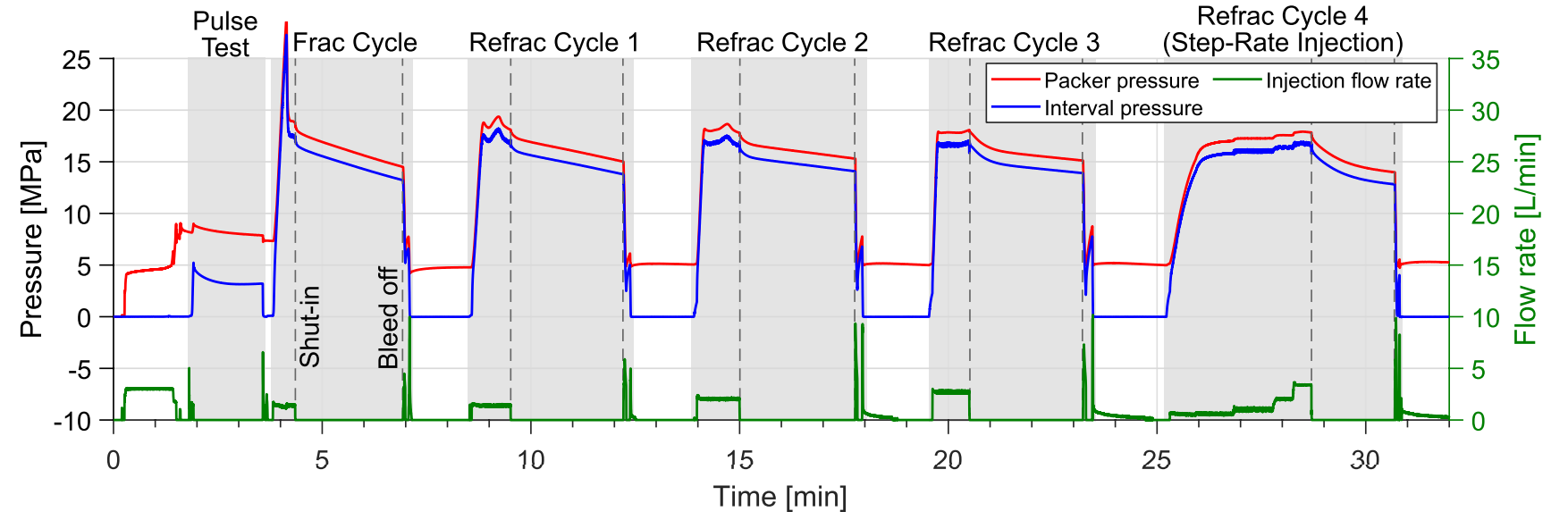
The hydraulic fracturing technique (also termed mini-frac test) is commonly used to estimate the in-situ stress field. We recently conducted a mini-frac stress measurement campaign in the newly-established Bedretto Underground Laboratory (BedrettoLab) in the Swiss Alps. Four vertical boreholes, dedicated for stress characterization of the granitic rock mass, hosted a total of 19 mini-frac test intervals. Systematic pressure transient analysis was performed to carefully estimate the magnitude of the least principal stress ($S_3$). We compared five different methods (inflection point, bilinear pressure decay rate, tangent, fracture compliance, and jacking pressure) to identify an adequate approach best suited for our test scale and the host rock mass. We found that the methods used to determine the fracture closure pressure underestimate the magnitude of $S_3$, presumably due to the rapid closure of the hydraulic fracture after shut-in. The most consistent results were found using the inflection point and bilinear pressure decay rate method, which both determine the (instantaneous) shut-in pressure as the proxy for the $S_3$ magnitude. The determined shut-in pressure, or $S_3$ magnitude, is $14.6 \pm 1.4$ MPa from the inflection point method. This allowed us to further estimate the stress environment around the BedrettoLab, which is transitional between normal and strike-slip faulting. The measured local pore pressures from extended shut-in periods are between 2.0 and 5.6 MPa, significantly below hydrostatic. A combination of drainage, cooling, and the excavation damage zone of the tunnel may have significantly perturbed the in-situ stress field in the vicinity of the BedrettoLab.
How Does In Situ Stress Rotate Within a Fault Zone? Insights From Explicit Modeling of the Frictional, Fractured Rock Mass
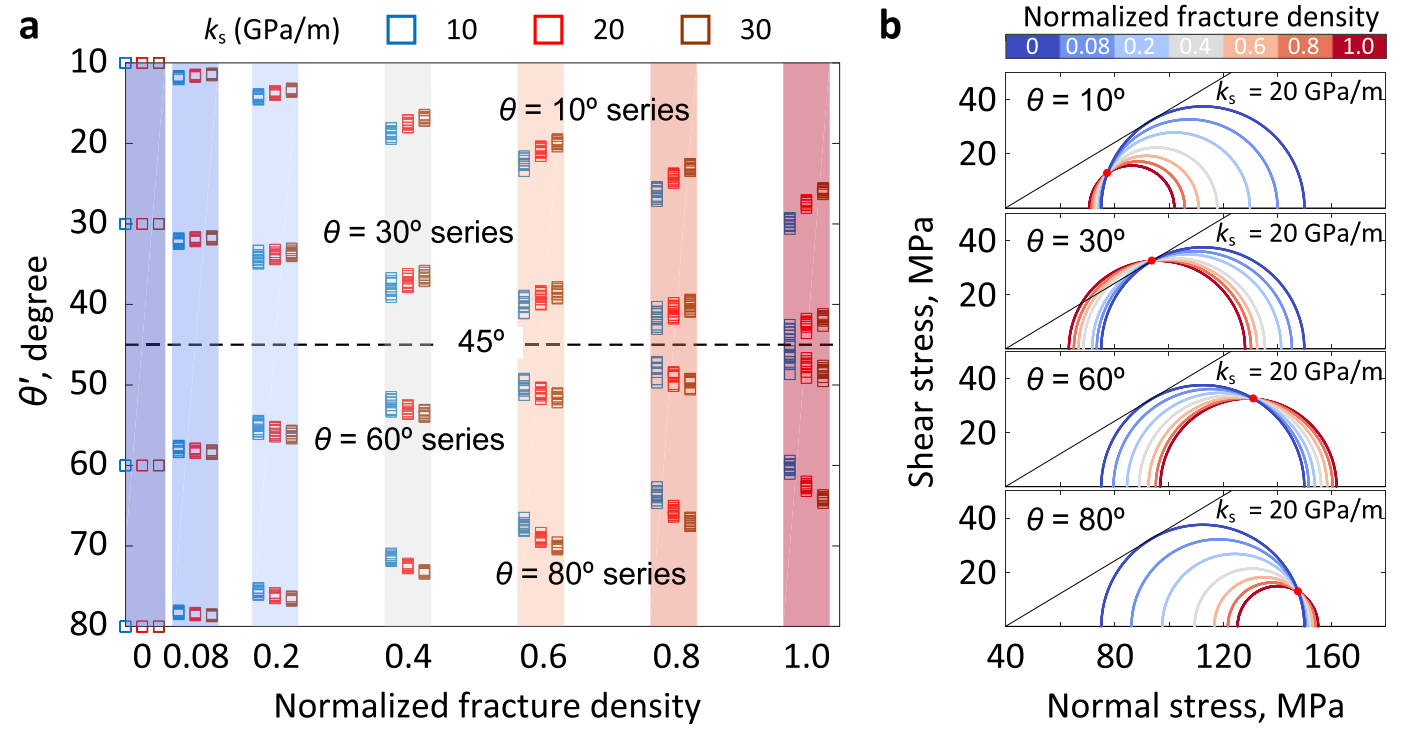
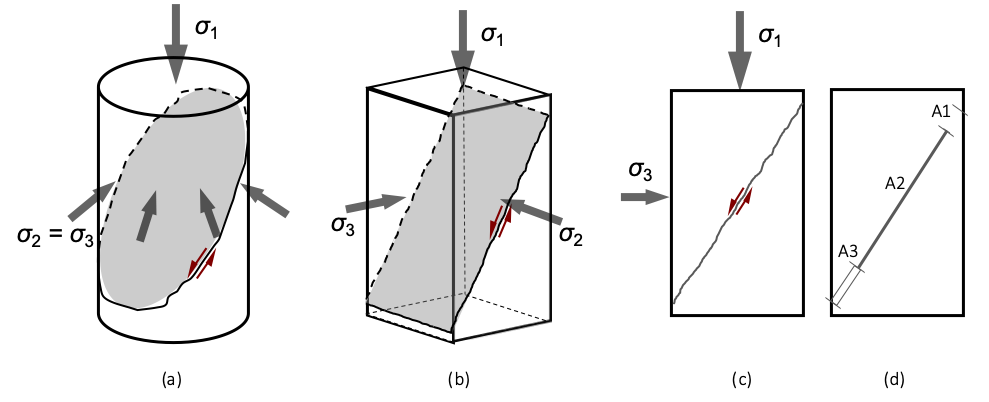
We quantitatively investigate the spatial stress variations within the fault zone rock mass by explicitly incorporating macroscopic fractures into a 2D multilayer model. Based on elastic crack theory, we first derive a unified constitutive law for frictional fractures, featuring elastic and plastic shear deformation and shear-induced dilatancy. To honor the varying degrees of damage across fault zones, the multilayer model is composed of varying densities of randomly oriented frictional fractures from layer to layer. Under the boundary conditions specific to fault zones, the global mechanical response of each layer is quantitatively related to the local fracture deformation. We show that the major principal stress always rotates toward a limiting angle of $45^\circ$ with respect to the fault plane and that the differential stress invariantly decreases with increasing fracture density. Approaching the fault core, the mean stress can either increase or decrease, depending on whether the fault strikes at a high ($\gt 45^\circ$) or low ($\lt 45^\circ$) angle to the regional major principal stress. Accumulated damage also results in the decrease and increase of the effective Young's modulus and Poisson's ratio of the fractured rock mass, respectively. Both the fracture properties and pore pressure affect the stress variations by modulating the fracture-associated deformation and the relative proportion of the elastic and plastic components. Our model illuminates the systematic variations of in-situ stresses and effective elastic properties within the damage zone of a mature fault.
Impoundment-Associated Hydro-Mechanical Changes and Regional Seismicity Near the Xiluodu Reservoir, Southwestern China
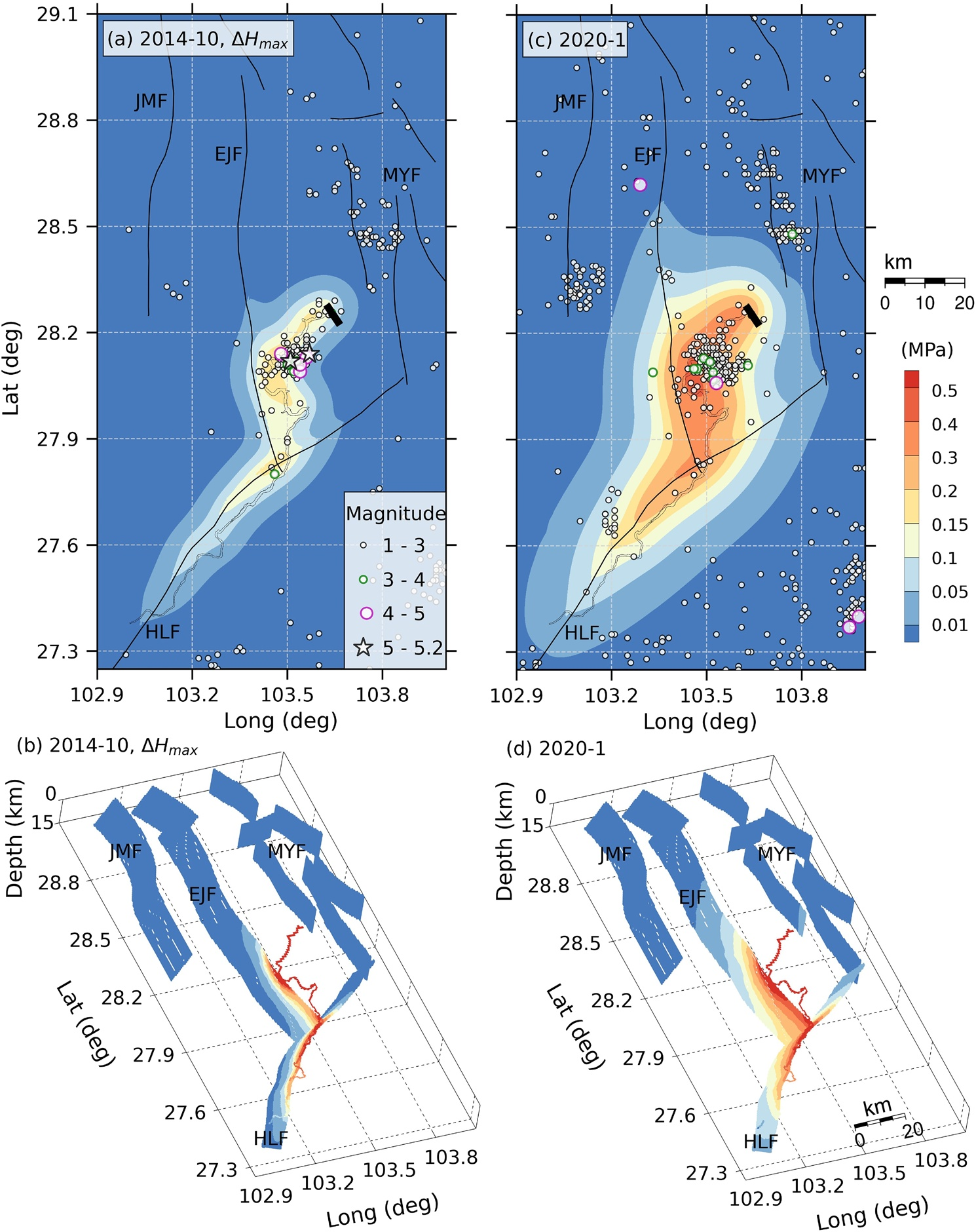
Four large hydropower stations have recently been built downstream the Jinsha River in Southwestern China with a strong regional tectonic activity background. There is widely felt seismicity since the impoundment of the Xiluodu and Xiangjiaba reservoirs, increasing the public concern in this region. We begin with a criticality analysis of the faults near these reservoirs to quantify their susceptibility to triggered seismicity. Then we focus on the Xiluodu reservoir to investigate the correlation between the impoundment and seismicity nearby. We analyze the spatio-temporal distribution of seismicity near the Xiluodu reservoir, and identify the plausible rapid and delayed seismic response due to the impoundment. According to the impoundment record, we explicitly model the hydro-mechanical changes due to diffusion and reservoir water load, that is, pore pressure, elastic stress, and the resulting Coulomb stress. Our results show that the pore pressure changes can reach a level that may trigger fault reactivation and consequently, seismicity nearby. The water load can also induce the positive Coulomb stress changes on faults, depending on the fault orientation, which is especially important for understanding the earthquakes that occurred shortly after the impoundment and at more than 10 km distance from the reservoir. The combination of these two effects can induce positive Coulomb stress change over a larger area, which overlaps the majority of the events after the impoundment, including two M5+ events. While the causal relationship between the impoundment and seismicity warrants further analysis, we hope to inform the regional seismic impact of impoundment with this timely study.
Global Frictional Equilibrium via Stochastic, Local Coulomb Frictional Slips
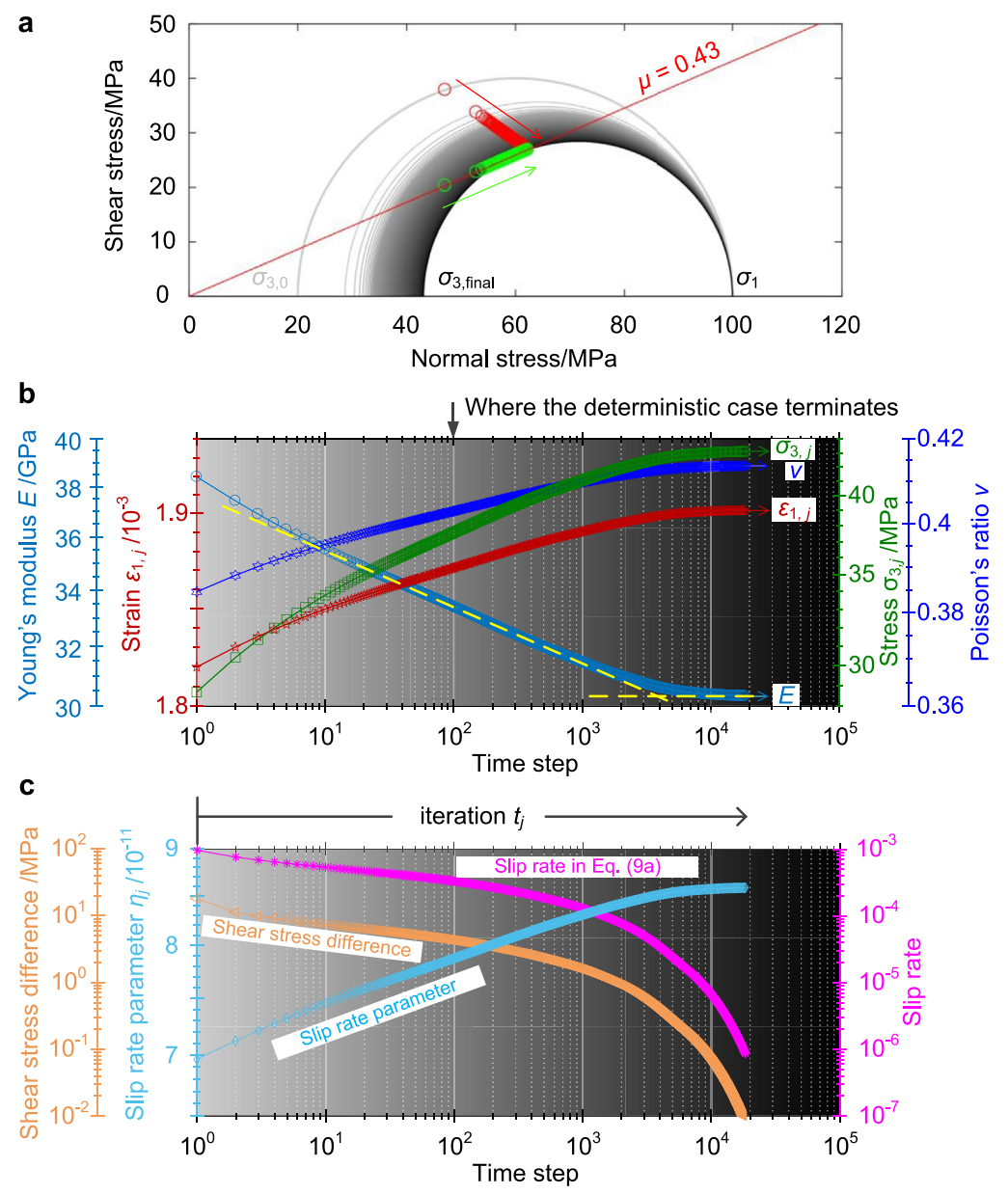
Based on the assumption that fault slip dominates in the stress relaxation in the brittle crust, Coulomb theory allows for the crustal stress estimation with an empirical frictional coefficient. However, natural variability of fault friction and slip uncertainty exist in the Earth's crust. To address the extent to which heterogeneous frictional slips influence crustal stress and its evolution, we establish a quasi-static, 2D model to represent the fractured crustal rock mass. The model consists of randomly oriented fractures with heterogeneous distribution of frictional coefficients. The global mechanical response is quantitatively related to the cascades of local frictional slips under specific boundary conditions. The temporal evolution of stress is explicitly modeled by an iterative process where a simple slip law is assumed for critical fractures. We particularly illustrate the stress evolution in a normal faulting stress regime, considering different distributions of frictional coefficients. All cases indicate that the decrease in differential stress manifests as a self-organized process, eventually leading to the frictional equilibrium of the fractured rock mass. The final stress state upon equilibrium jointly depends on the orientation and frictional coefficient of all fractures therein. The model informs that the global stress state of a stochastic system can depart substantially from a deterministic estimation via an empirical frictional coefficient. This model quantitatively corroborates and extends the notion of frictional equilibrium, and reveals far more profound influence of system heterogeneity on the local and global stress evolution.
Predicting Lithology-Controlled Stress Variations in the Woodford Shale from Well Log Data via Viscoplastic Relaxation
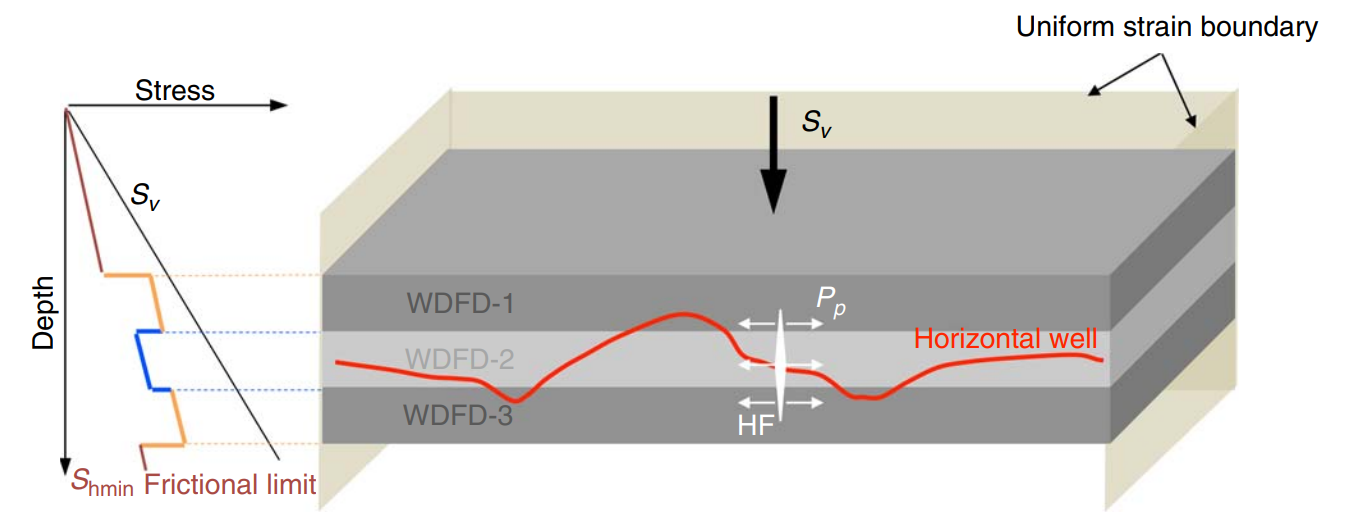
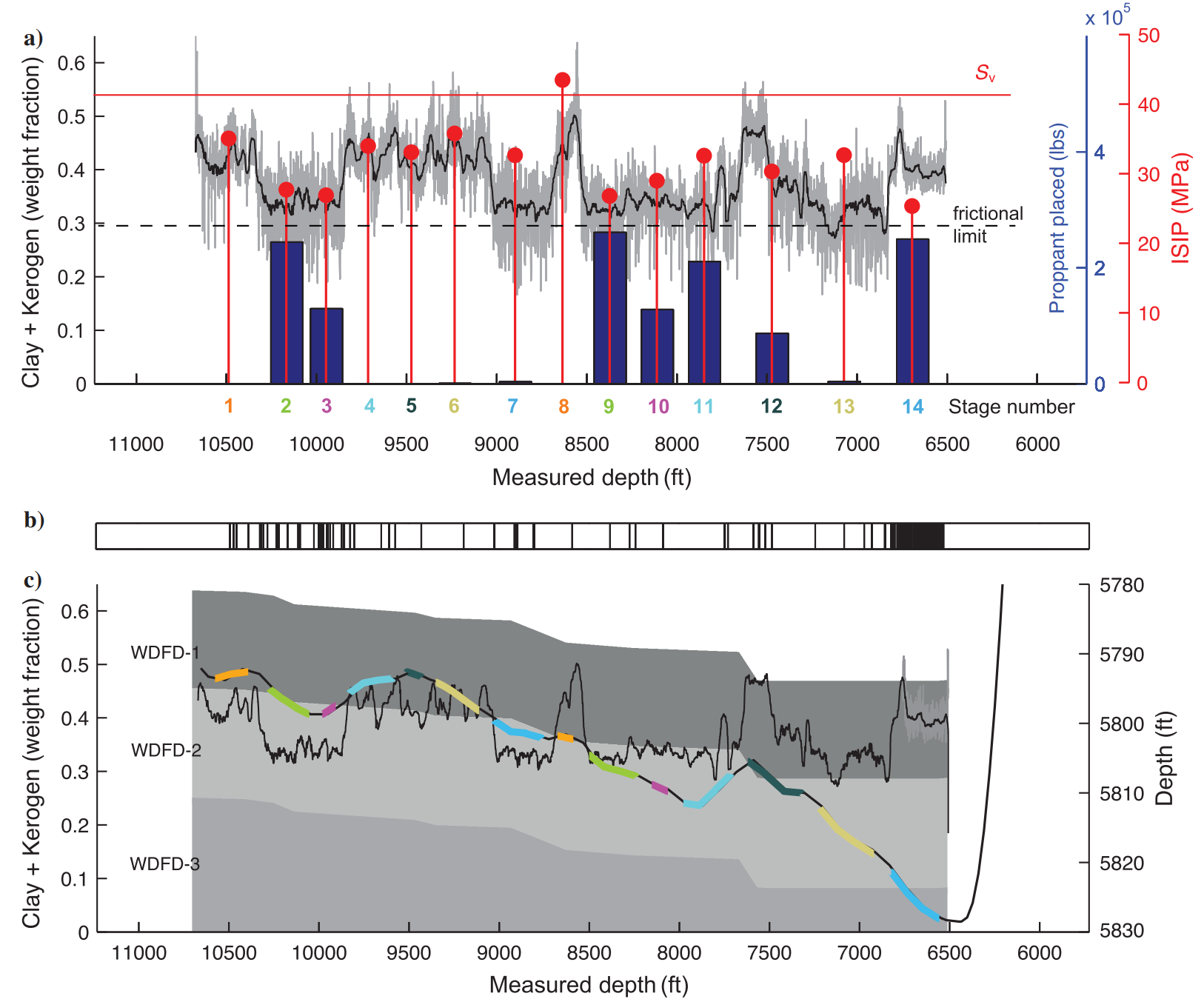
We report here a study of lithology-controlled stress variations observed in the Woodford shale (WDFD) in north-central Oklahoma. In a previous study, we showed that the magnitude of the minimum horizontal stress $S_{\mathrm{hmin}}$ systematically varied with the abundance of clay plus kerogen in three distinct WDFD lithofacies. In this study, we demonstrate that it is possible to quantitatively estimate the observed stress variations using elastic properties determined from well logs as proxies for laboratory-inferred parameters via a relatively simple viscoplastic constitutive relationship. The modeled variations of $S_{\mathrm{hmin}}$ along the two horizontal wells that encounter the three lithofacies along their respective well trajectory are in good agreement with measured values obtained from multistage hydraulic fracturing (HF). We believe that the application of the workflow described here in the context of viscoplastic stress relaxation can facili tate the understanding of layer-to-layer stress variations with lithology and thus contribute to improved HF effectiveness.
Lithology-controlled stress variations and pad-scale faults: A case study of hydraulic fracturing in the Woodford Shale, Oklahoma
We have conducted an integrated study to investigate the petrophysical and geomechanical factors controlling the effectiveness of hydraulic fracturing (HF) in four subparallel horizontal wells in the Mississippi Limestone-Woodford Shale (MSSP-WDFD) play in Oklahoma. In two MSSP wells, the minimum horizontal stress $S_{\mathrm{hmin}}$ indicated by the instantaneous shut-in pressures of the HF stages are significantly less than the vertical stress $S_v$. This, combined with observations of drilling-induced tensile fractures in the MSSP in a vertical well at the site, indicates that this formation is in a normal/strike-slip faulting stress regime, consistent with earth quake focal mechanisms and other stress indicators in the area. However, the $S_{\mathrm{hmin}}$ values are systematically higher and vary sig nificantly from stage to stage in two WDFD wells. The stages associated with the abnormally high $S_{\mathrm{hmin}}$ values (close to $S_v$) were associated with little to no proppant placement and a limited number of microseismic events. We used compositional logs to determine the content of compliant components (clay and kero gen). Due to small variations in the trajectories of the horizontal wells, they penetrated three thin, but compositionally distinct WDFD lithofacies. We found that $S_{\mathrm{hmin}}$ along the WDFD hori zontals increases when the stage occurred in a zone with high clay and kerogen content. These variations of $S_{\mathrm{hmin}}$ can be explained by various degrees of viscous stress relaxation, which results in the increase in $S_{\mathrm{hmin}}$ (less stress anisotropy), as the compliant com ponent content increases. The distribution of microseismic events was also affected by normal and strike-slip faults cutting across the wells. The locations of these faults were consistent with unusual lineations of microseismic events and were confirmed by 3D seismic data. Thus, the overall effectiveness of HF stimulation in the WDFDwellsatthis sitewas strongly affected by the abnormally high HF gradients in clay-rich lithofacies and the presence of preexist ing, pad-scale faults.
Laboratory experiments simulating poroelastic stress changes associated with depletion and injection in low-porosity sedimentary rocks
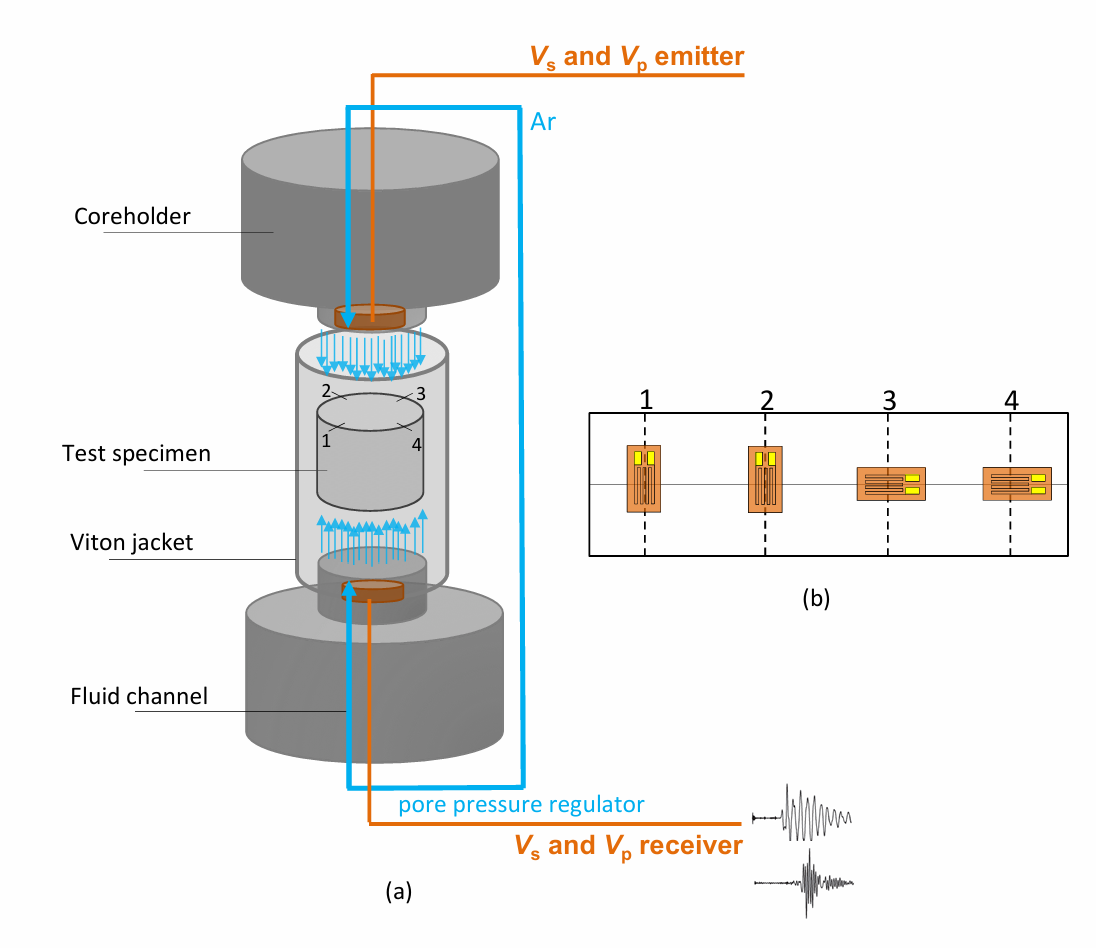
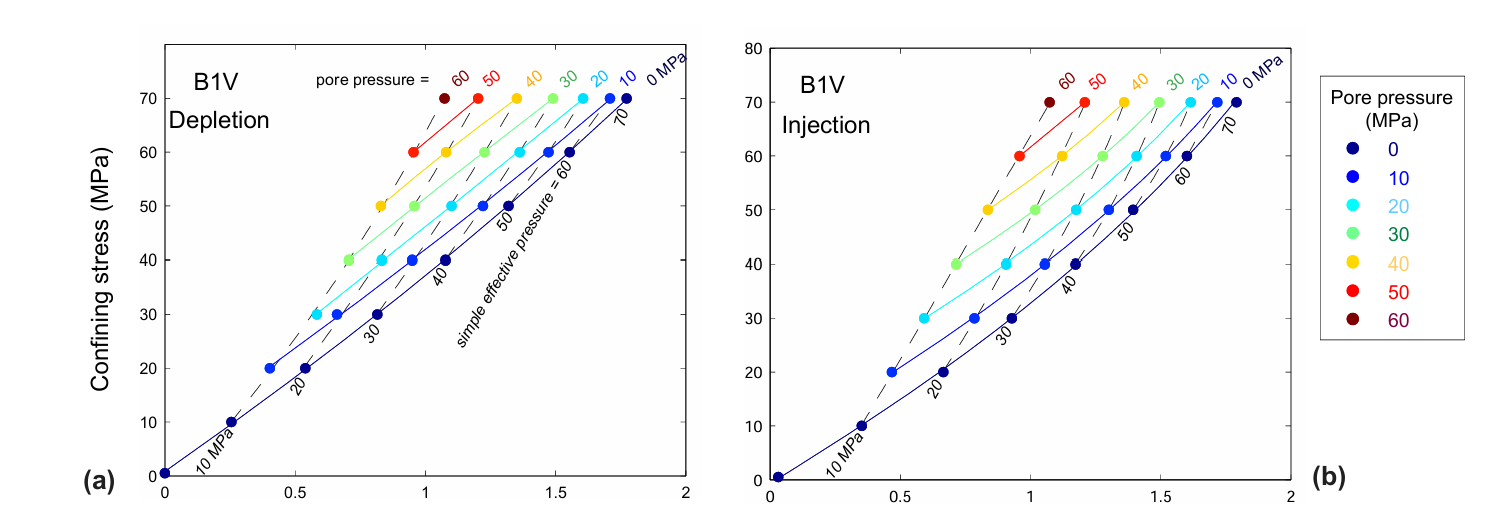
We characterized the poroelastic deformation of six cores from three formations associated with the Bakken play in the Williston Basin (the Lodgepole, Middle Bakken, and Three Forks formations). All are low-porosity, low-permeability formations, but vary considerably in clay, kerogen, and carbonate content. The experimental program simulated reservoir stress changes associated with depletion and injection via cycling both the confining pressure ($P_c$) and pore pressure ($P_p$). We measured volumetric strain, derived the corresponding bulk modulus, and calculated the Biot coefficient ($\alpha$). We found $\alpha$, which generally ranges between 0.3 and 0.9, to vary systematically with $P_c$ and $P_p$ for each of the specimens tested. The effect of pore pressure on $\alpha$ is much larger at low simple effective stress ($\sigma = P_c - P_p$) during depletion than injection. The $\alpha$ decreases with $\sigma$ for all pore pressures. For the same $P_c$ and $P_p$, the Biot coefficient is consistently higher during injection than during depletion. Given the observed variations of $\alpha$ with $P_c$ and $P_p$, the modeling of reservoir stress changes using a constant $\alpha$ could be problematic as poroelastic stress changes during depletion and injection are not likely to follow the same path. Scanning electron microscope examination of microstructures suggests that the variations of the bulk modulus and the Biot coefficient can be attributed to the abundance of compliant components (pores, microcracks, clays, and organic matter) and how they are distributed throughout the rock matrix.
The application of a Matsuoka-Nakai-Lade-Duncan failure criterion to two porous sandstones
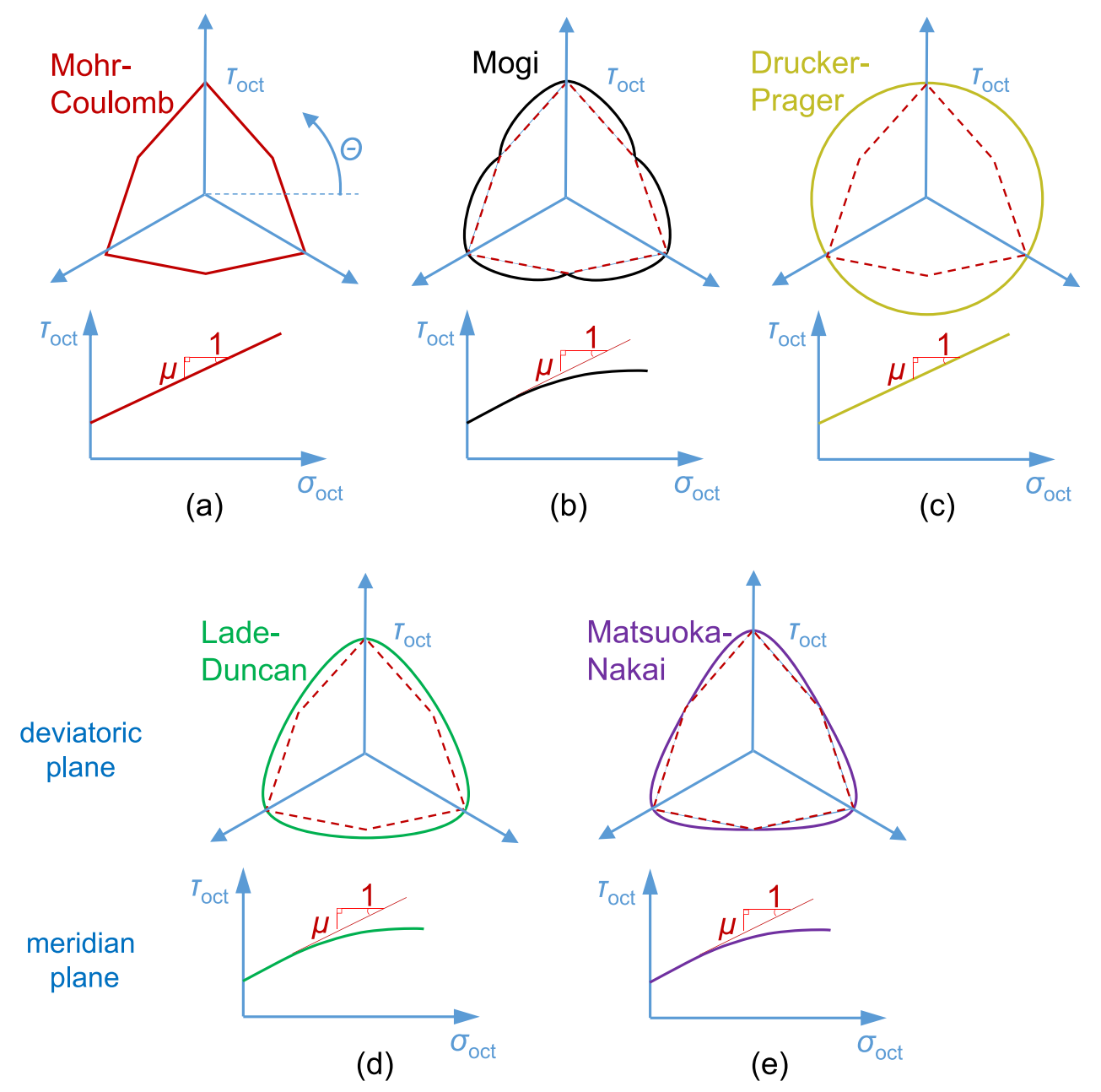
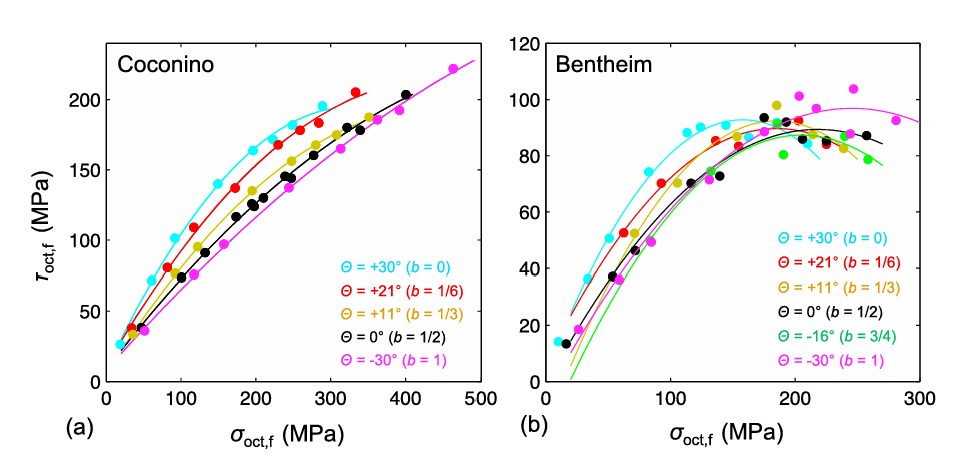
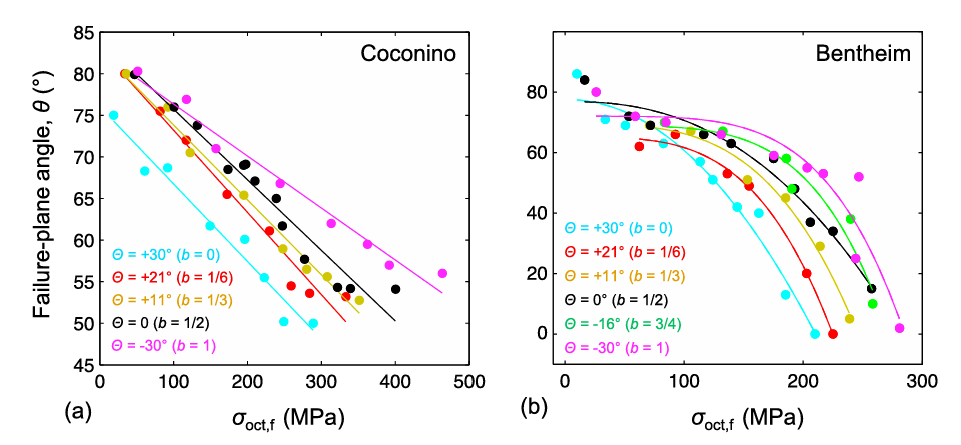
We summarize two suites of recent true triaxial tests in two porous sandstones, Coconino and Bentheim. One suite of tests conducted under constant $\sigma_2$ and $\sigma_3$, which revealed the effect of $\sigma_2$ and $\sigma_3$ on rock failure. The other suite of tests, performed under constant Lode angle, determined the failure dependencies on mean stress and Lode angle. Building and modifying failure descriptions by Matsuoka-Nakai (MN) and Lade-Duncan (LD), an explicit failure criterion (modified-MNLD) that generalizes a class of failure forms is used to fit the novel loading path data of both sandstones. The determined failure descriptions fit both rocks well over a wide range of failure conditions. Then, the generated failure descriptions were further used to predict failure conditions under the constant $\sigma_2$ and $\sigma_3$ loading path. The predictions by the modified-MNLD are generally consistent with these data. The predictions also successfully replicated the variation of $\sigma_{1,\mathrm{peak}}$ with $\sigma_2$ under constant $\sigma_3$, suggesting the potential of the modified-MNLD to clarify the effect of $\sigma_2$ on rock failure.
Failure characteristics of two porous sandstones subjected to true triaxial stresses
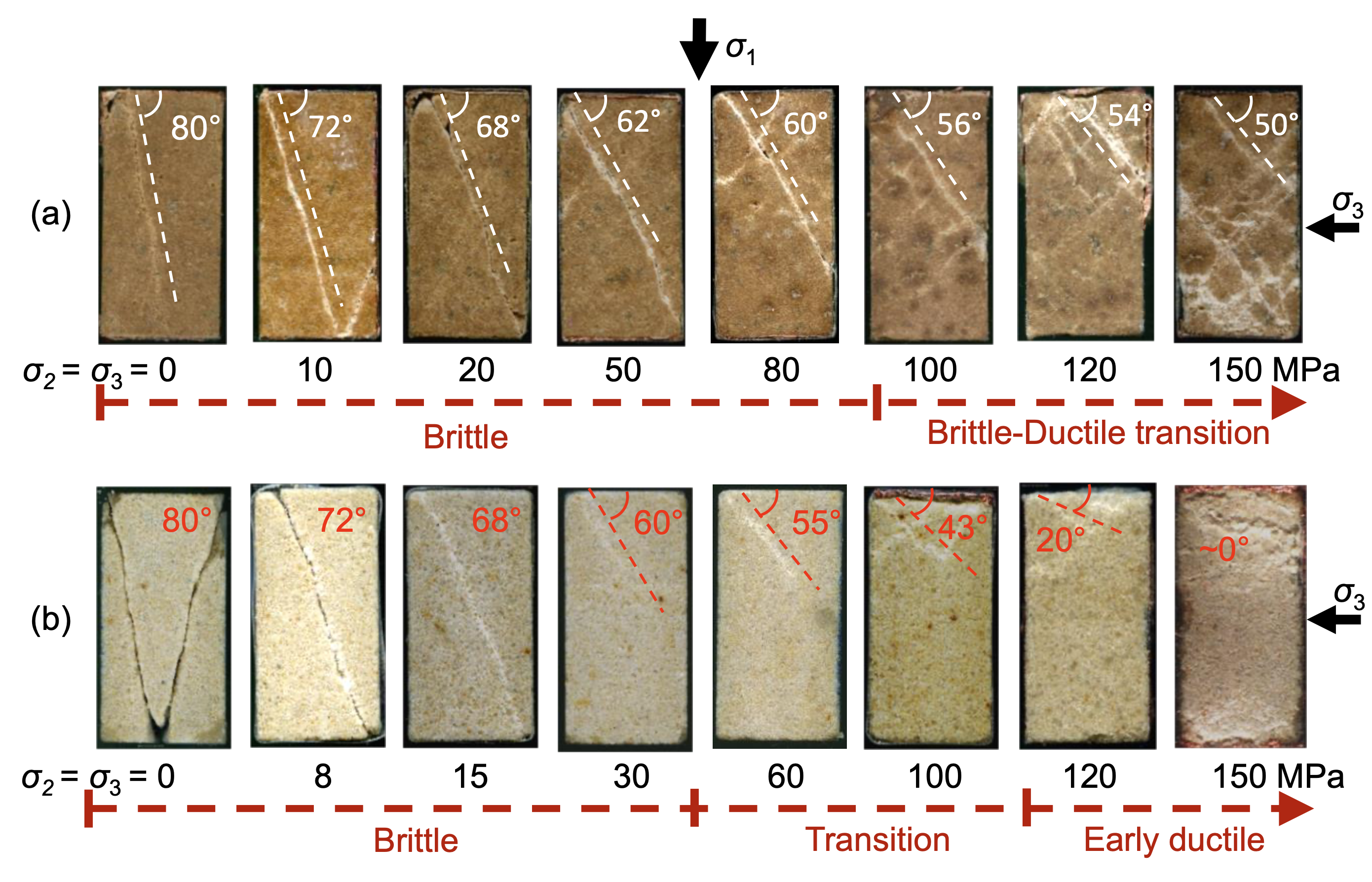
We conducted an extensive suite of true triaxial experiments in two porous sandstones, Bentheim (porosity $\approx 24\%$) and Coconino (17.5%). Our experiments demonstrate that failure of both sandstones is not only a function of $\sigma_3$ but also of $\sigma_2$. For a given $\sigma_3$, $\sigma_1$ at failure ($\sigma_{1,\mathrm{peak}}$) increases as $\sigma_2$ is raised above $\sigma_3$ between tests. The $\sigma_{1,\mathrm{peak}}$ reaches a peak as $\sigma_2$ is about halfway between $\sigma_3$ and $\sigma_1$ and then gradually decreases such that when $\sigma_2 \approx \sigma_{1,\mathrm{peak}}$, it approaches its initial magnitude when $\sigma_2 = \sigma_3$. For a constant $\sigma_3$, failure-plane angle increases with $\sigma_2$ by a maximum of less than $10^\circ$ as $\sigma_2$ rises from $\sigma_2 = \sigma_3$ to $\sigma_2 = \sigma_{1,\mathrm{peak}}$. The effect of $\sigma_2$ on both failure level and failure-plane angle is stronger in the lower-porosity Coconino sandstone than in the Bentheim sandstone. The $\sigma_2$ dependence of failure mode in the Bentheim is different than Coconino over the same $\sigma_3$ range. Both sandstones failed dilatantly at low $\sigma_3$ magnitudes. However, at high $\sigma_3$ (100-120 MPa), Bentheim sandstone developed shear-enhanced compaction bands, followed by pure compaction bands at $\sigma_3 = 150$ MPa. Compaction bands were not observed in the Coconino. Microscopic observations via SEM reveal that tensile microcracking is dominant when shear banding occurs (under low $\sigma_3$), while pervasive grain crushing and pore collapse inside compaction bands are observed at high $\sigma_3$.